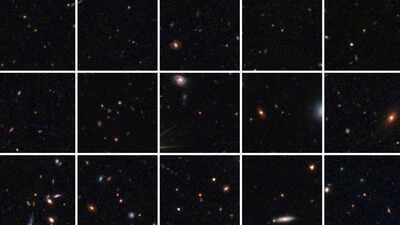
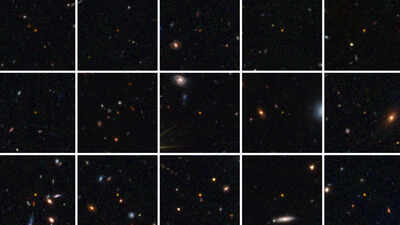
Looking back into the Universe is, in many ways, like looking back in time. The light travelling across enormous cosmic distances can take billions of years to reach us, carrying glimpses of objects and events that existed long before our own planet came into being.Now, the European Space Agency’s (ESA) Euclid space telescope has added another important discovery to this picture, identifying 31 ancient quasars, including two that have broken records for being the most distant of their kind ever observed. These exceptionally bright cosmic objects were already shining when the Universe was only about 670 million years old, roughly five per cent of its present age.
Euclid and researchers
Launched in July 2023, Euclid was designed primarily to investigate the dark Universe, including dark matter and dark energy, and to create an extensive map of the cosmos. The 31 quasars were identified using data from Euclid’s Wide Survey, which examined approximately 3,000 square degrees of the sky during the first year and a half of the survey. The observations were also followed up with observations from other facilities, including the Keck Observatory, the Magellan telescopes and the Large Binocular Telescope.The findings were announced in July, in a study carried out by Daming Yang, by Leiden University in the Netherlands, which was published in the journal Astronomy & Astrophysics on July 6, 2026. Of the 31 newly identified objects, 12 have redshifts of seven or higher, placing them within the Universe’s first 770 million years.Furthermore, according to Imperial College London’s news report dated July 6, 2026, Professor Daniel Mortlock, from its Departments of Physics and Mathematics, also played an important role in developing the methods used to identify these distant objects, including the application of Bayes’ theorem.
Two quasars break the previous cosmic record
Among the 31 objects identified by Euclid, two have gathered more attention. The most distant, named EUCL J172902.75+641018.1, has a redshift of approximately 7.77, while the second, EUCL J125308.55+705432.3, has a redshift of 7.69.Both were already present when the Universe was less than 700 million years old. Their light has travelled for more than 13 billion years before reaching us, allowing researchers to study conditions that existed during a remarkably early chapter of cosmic history. The discovery also surpasses the previous record-holder, a quasar identified in 2021 with a redshift of 7.64. According to the European Space Agency, the latest finding more than doubles the number of quasars known from such an early period.A rather exciting part of this research is that astronomers are not simply finding more distant objects, but are beginning to identify quasars that are considerably fainter than those earlier searches were able to detect. In fact, the second- and third-most-distant quasars in the study are among the faintest known at redshifts above 7.5, giving scientists an opportunity to examine a wider population rather than studying only the brightest cosmic objects.
What exactly are quasars, and why are they so bright?
But to understand how remarkable this discovery is, it is important to take a step back and revisit the Big Bang, which happened approximately 13.8 billion years ago. The Universe did not immediately look anything like it does today. It began as an extremely hot, dense environment and gradually expanded and cooled. Over time, the first stars and galaxies began to form.And somewhere within this early Universe, enormous black holes were already growing. These black holes became the engines behind quasars.But what really are quasars? A quasar is an incredibly luminous region at the centre of a galaxy, powered by a supermassive black hole that pulls in the surrounding gas and dust.Now, a black hole is often imagined as an object from which nothing, not even light, can escape. However, the region surrounding one can be extraordinarily energetic. When gas, dust and other material move towards a supermassive black hole, they gather into a swirling structure called an accretion disc. As this material heats up while spiralling inwards, it releases enormous amounts of energy and radiation.During this relatively short-lived phase in a galaxy’s existence, its central region can become hundreds or even thousands of times brighter than the rest of the galaxy combined. This is what makes quasars so interesting to astronomers. Despite being situated at tremendous distances, their light can still be detected across the Universe.Following the Big Bang, the cosmos went through a period often described as the cosmic dark ages, when much of the Universe was filled with relatively cold, neutral hydrogen gas. As the first stars and galaxies began forming, they released energetic radiation that gradually ionised the surrounding gas, changing the conditions of the early Universe. The identification of these quasars is not only a breakthrough in astronomy, but also offers new insights into the early Universe, as the powerful radiation from these quasars can help scientists understand how the first generation of galaxies actually evolved.