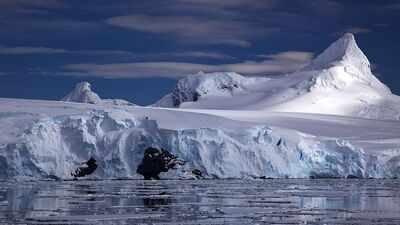
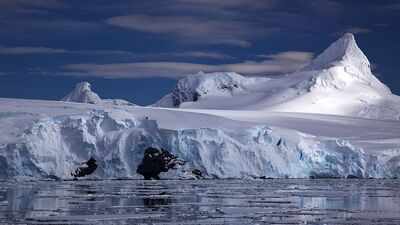
Scientists have directly linked surface meltwater to a sudden increase in the speed of an Antarctic glacier, after drilling deep into Langhovde Glacier in East Antarctica. The study titled ‘Acceleration of an Antarctic outlet glacier driven by surface meltwater input to the base,’ found that water from melting snow and ice reached the glacier bed and raised pressure beneath it. During periods of intense melting and rain, the grounded ice accelerated by 10–20%, with one event showing a peak speed about 20% above normal. The findings provide direct evidence that meltwater can affect how quickly Antarctic glaciers move towards the ocean.
How did meltwater make the Antarctic glacier move 20% faster
The clearest speed-up came in late December 2021, after several days of relatively warm weather. Daily maximum temperatures reached about 5°C, and intensive melting continued for around 5 days.The researchers recorded a sharp rise in ice speed, with the floating section of the glacier moving about 20% faster than its background speed. A similar or even larger increase occurred at the measurement point on grounded ice.At the same time, the grounded part of the glacier rose by about 120 millimetres. The study explains that this upward movement is consistent with water building up pressure beneath the ice and partly lifting it from the bed.That matters because a glacier does not simply move as one solid block. Its lower surface can slide over the ground, and water beneath the ice can reduce the resistance holding it back. The researchers describe this as enhanced basal sliding. Their measurements are important because the connection between surface melting and faster glacier movement in Antarctica had previously been difficult to demonstrate directly.
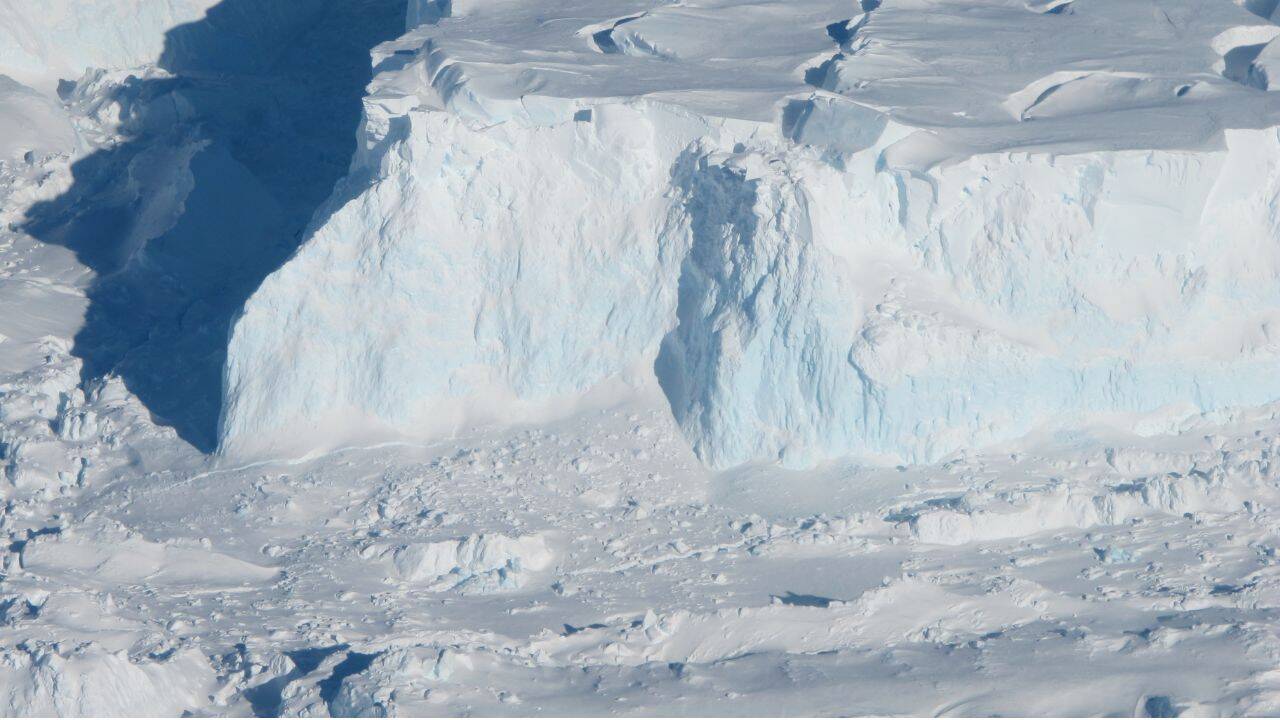
Image Credit: Wkipedia
How did scientists prepared the site to measure such a huge geographical event
The discovery came from a field study on Langhovde Glacier, a roughly 3-kilometre-wide outlet glacier on Lützow-Holm Bay in East Antarctica. Between December 2021 and February 2022, researchers used hot-water drilling to reach the bottom of the glacier and installed instruments to monitor what was happening beneath the ice.According to the study, one of the boreholes reached the glacier bed at a depth of 552 metres. The drilling site was about 1 kilometre upglacier from the grounding line, where the ice changes from resting on the ground to floating on seawater.The researchers also placed satellite-positioning equipment on the glacier to measure its movement. This allowed them to compare changes in ice speed with conditions deep below the surface.
Rain provided another test of the same process
A second acceleration occurred between 2nd and 6th January 2022. This time, rainfall provided a particularly useful clue. About 30 millimetres of rain fell on 2nd January, an unusual event for the area. Before the rain, the glacier was covered by a snow layer about 50 millimetres thick. The rain and meltwater soaked the snow, and by the following morning the surface was completely saturated.The researchers then observed meltwater draining into a crevasse roughly 200 metres downhill from the boreholes. As the surface water entered the glacier, the water pressure beneath the ice rose.The pressure in one borehole increased from a level equivalent to 93–94% of the ice pressure to about 97%. The pressure peak broadly coincided with the peak in glacier speed.
The glacier was also connected to water beneath the ice shelf
The drilling revealed another important feature beneath Langhovde Glacier. Water beneath the grounded ice was hydraulically connected to a shallow cavity beneath the nearby ice shelf.The borehole water was fresh rather than seawater, but changes in ocean tides were transmitted through the subglacial drainage system. The researchers found that water pressure beneath the glacier was already very high, reaching 93–97% of the pressure exerted by the overlying ice.Such high pressure creates conditions that favour movement along the glacier bed. The study found that the connection also creates a route for meltwater to flow towards the ocean beneath the ice shelf.The researchers suggest that this discharge may contribute to circulation and melting beneath the ice shelf, adding another reason why the hidden water system beneath the glacier matters.
What could faster glacier movement mean for Antarctica’s future
The researchers say the observations from Langhovde Glacier are likely to have wider implications because surface meltwater is found across many parts of the Antarctic coast.Interestingly, the study found that the amount of surface melting during December and January 2021–22 was about 40% below the long-term average calculated from 1989–90 to 2025–26.That suggests the meltwater-driven acceleration observed during the study may occur more often than the field team happened to capture. The study also points to a potential future concern. As Antarctica warms, coastal meltwater production is expected to increase. More intense weather events, like atmospheric rivers that bring heat and moisture towards the Antarctic coast, could produce stronger episodes of melting and rainfall.The direct measurements from Langhovde Glacier show that water reaching the glacier bed can rapidly change how the ice moves. Understanding how widespread this process is will be important for predicting how Antarctic glaciers respond as the climate changes.