Researchers report oxygen production on the floor of the Pacific Ocean, where oxygen levels were expected to decrease as deep-sea organisms consumed the gas. The finding came from experiments at an abyssal seafloor covered with polymetallic nodules. Researchers used benthic chambers to measure oxygen changes and found that concentrations increased over two days instead of falling.In 25 chamber experiments, oxygen levels rose from an average starting concentration of 185.2 micromoles per litre to maximum levels of 201 to 819 micromoles per litre within 47 hours. According to research published in Nature Geoscience, titled ‘Evidence of dark oxygen production at the abyssal seafloor‘, the researchers linked this unexpected oxygen production to polymetallic nodules and proposed that electrical potentials on their surfaces may help split seawater into hydrogen and oxygen.
How researchers measured oxygen production on the Pacific Ocean floor
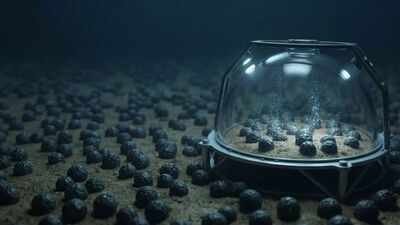
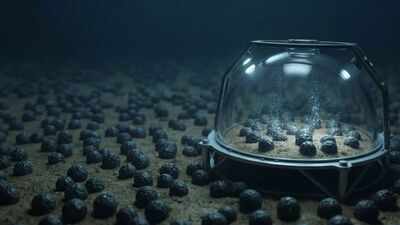
The researchers carried out experiments in the Nauru Ocean Resources Inc. (NORI)-D licence area of the Clarion–Clipperton Zone in the Pacific Ocean. Polymetallic nodules cover extensive areas of this seafloor. The team used autonomous benthic chamber landers to measure oxygen changes in enclosed sections of sediment and seawater.Across 25 chamber incubations, oxygen concentrations began at an average of 185.2 micromoles per litre. They later reached maximum levels between 201 and 819 micromoles per litre over 47 hours. The resulting dark oxygen production ranged from 1.7 to 18 millimoles of oxygen per square metre per day.
What laboratory tests revealed about oxygen production
The team investigated several possible explanations for the unexpected rise. Measurements showed that oxygen production also occurred in sealed laboratory incubations, including tests containing only polymetallic nodules. The researchers linked the process mainly to the nodules and considered biological explanations unlikely to account for most of it. Experiments using mercury chloride, which poisons many biological processes, still recorded oxygen production.The team also assessed radioactive processes in sediments and chemical reactions involving manganese oxide. Their calculations indicated that these mechanisms could explain less than 0.5% of the oxygen produced. The findings noted that the nodules themselves played a major role, although the precise process behind the production remained uncertain.
Electrical activity offers a possible explanation for deep-sea oxygen
The researchers measured electrical potentials at 153 locations on the surfaces of 12 nodules. These samples came from the NORI-D, UK1 and BGR licence areas. Some measurements recorded potentials of up to 0.95 volts. The authors noted that splitting seawater into hydrogen and oxygen requires an input voltage of 1.23 volts, plus an additional overpotential.They proposed that metal-rich layers inside the nodules might create a potential difference that supplies energy for seawater electrolysis. In this process, water is split, and oxygen is released. The team described this explanation as a hypothesis, not a confirmed mechanism. The voltage readings varied considerably across different points.
Researchers call for further study of dark oxygen production
The study found that oxygen production was not constant. Its rate varied between experiments, and the researchers observed that it slowed during some incubations. They also found a relationship between production and the average surface area of the nodules.The authors cautioned against using the measurements to estimate oxygen production across the seafloor because the process may not continue over time. Its activity may also depend on the density and type of nodules, as well as sediment covering their surfaces.According to the researchers, further work is needed to establish the process’s timing and distribution. Understanding it could help clarify the role of dark oxygen in abyssal ecosystems and the effects of deep-sea mining.