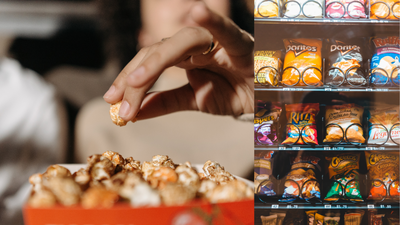
Reaching for chips, nuts, or crackers right after a bad day is a habit almost everyone recognises. Many people assume the craving is about salt or sugar, yet new research suggests the real driver may be texture. Texture, it seems, matters surprisingly much. Scientists tested how two negative emotions, anger and anxiety, change what the mouth wants to do and which foods people pay attention to. In this article, you will learn what the researchers measured, why anger favours crunch while anxiety favours soft foods, what the results do not prove, and how to respond when emotions steer your snacking.
What the new research found about anger, anxiety, and the food textures people prefer when upset
A 2026 study ‘Crunch your anger, squash your anxiety: Impact of negative emotions on food texture preferences’ by S. Sinem Atakan and Hazal Duman Alptekin, published in the journal Appetite, set out to answer a question that had been overlooked. Earlier research had shown that emotions influence how much people eat and what kind of food they choose. For example, people feeling negative emotions often eat more sweet and high-fat foods. But whether emotions also shape the texture people want had never been tested, even though texture often rivals taste and smell in how much it matters to enjoying food.The authors open with two imagined students. One is anxious while waiting for exam results. The other is furious after an airline damaged his suitcase and treated him with indifference. Both will eat that day, but will the angry student want something crunchy that invites forceful biting, and the anxious student something soft and soothing? The study, titled with a playful call to crunch your anger and squash your anxiety, suggests the answer is yes.
How two researchers tested mouth behaviour preferences and a brain activity study
The paper reports two studies. In the first, 112 participants were placed in either an anger group or an anxiety group and then reported their own preferences for mouth behaviours such as crunching and squashing. In the second, the researchers recorded electrical brain activity, a method called electroencephalography, from undergraduate students who took part in exchange for extra course credit. Recordings were collected from 58 students, and the reported results cover 53 participants.
People tended to favour crunchy, hard textures when angry and mushy, soft textures when anxious (Image: Canva)
Why anger may increase the urge to crunch while anxiety increases the urge to squash soft foods
In the first study, anger increased participants’ preference for crunching, while anxiety increased their preference for squashing, sometimes called smooshing. As a result, people tended to favour crunchy, hard textures when angry and mushy, soft textures when anxious. The authors describe this as a congruency effect, the food texture matches what the emotion pushes the body to do. They also considered the opposite possibility, that people might seek contrasting textures to calm themselves, but the pattern they found pointed to matching rather than calming.
What brain signals reveal about attention to crunchy and mushy textures
The second study went beyond what people said about themselves. Brain recordings showed that anger increased attention to crunchy textures, while anxiety increased attention to mushy textures, as reflected in a brain response called the P300 component. The researchers connect this to embodied emotion theory, the idea that emotions show up in bodily responses. Attention often happens before a conscious choice, so if your brain is already tuned toward crunchy foods when you are angry, the pull toward a crunchy snack can feel automatic.
Why crunchy cravings are not only about stress hormones or salt
The authors are open about the limits of their work. Participants responded to imagined eating situations rather than real food intake, so future studies need to test actual consumption. The groups were also fairly modest in size, particularly in the first study, which means smaller effects may have gone undetected. The researchers adapted their example foods to a Turkish cultural setting, so results may differ elsewhere. Their key message is that texture preferences may depend on the situation and your emotional state, rather than being fixed personal traits.Other explanations can sit alongside this one. A separate study, ‘Solid or Liquid Food: The Intention to Eat Different Foods under Negative Emotions’, found that people feeling negative emotions showed a stronger intention to eat solid food than liquid food, especially if they often eat emotionally. Stress raises cortisol, which can heighten cravings for high-fat, salty, and sugary foods. Hormones and texture may both play a part.Disclaimer: Every finding, interpretation, and implication described in this article comes from the cited research study and its authors. Nothing here represents a suggestion, advice, or conclusion. This content is for general information only and is not medical, nutritional, or psychological guidance. Please consult a qualified professional for personal concerns.