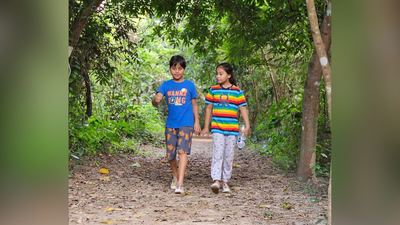
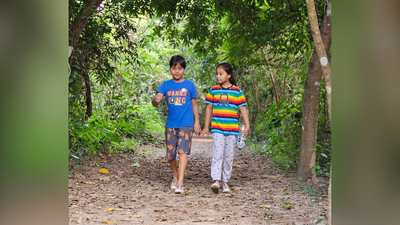
For most parents, school is one of the first big decisions of childhood. For Iftekhar and Shaheera, it was a decision they chose to step away from. Their 12-year-old twins, Isa and Sheherazad, have never attended a conventional school. Instead, their parents have built learning around travel, conversations, books, tutors, family and everyday experiences.The story offers a closer look at unschooling, an approach that asks a very different question: does learning have to follow a timetable and a syllabus?
5 Oct 2026 | 12:06
Parents, when your child refuses to greet relatives, do you make them say hello or respect their choice?
What exactly is unschooling?
Unschooling is not simply keeping a child at home instead of sending them to school. It is an approach in which learning is guided more by a child’s interests, questions and experiences than by a fixed school curriculum.A child might learn geography while travelling, understand history through places and people, or explore science after becoming curious about something seen in everyday life.The Calcutta Unschoolers group describes this as learning through life, family, books, online resources, grandparents and the wider community.
How is it different from homeschooling?
The two terms are often used interchangeably, but they are not always the same.Homeschooling can still follow a planned curriculum, lessons and academic goals outside a conventional school. Unschooling takes a less structured approach and gives greater importance to the child’s interests and natural curiosity.That does not mean there are no boundaries. The parents interviewed by The Telegraph’s My Kolkata stressed that discipline, parental involvement and active guidance still matter.
What does learning look like for these twins?
According to The Better India, Isa and Sheherazad study subjects including mathematics, science, history and languages. They have tutors and use online resources, while travel becomes part of their education.The twins have also learnt English and Bengali grammar and speak Marwari, according to the report.Their parents say the goal is not to remove learning but to move it beyond a classroom. Iftekhar, who experienced conventional schooling himself, said he wanted his children to explore life, discover what interests them and eventually choose their own paths.
The freedom comes with a responsibility
This is where the idea becomes more complicated than a simple “school versus no school” debate.Unschooling can offer children more room to explore. But it also places considerable responsibility on parents. They need time, resources, patience and the ability to recognise whether a child’s curiosity is actually turning into meaningful learning.Even families featured by My Kolkata acknowledged that the choice can be challenging. One parent described the experience as demanding, particularly as a single mother.There is also the practical question of future qualifications. According to Iftekhar students can pursue recognised certification through the National Institute of Open Schooling (NIOS), while some overseas institutions have different admission requirements.ID@undefined Caption not available.
Is unschooling right for every child?
Probably not. And that may be the most important lesson from this story.Some children thrive with classrooms, teachers, friends, routines and clearly defined academic goals. Others may flourish when given more freedom to follow their interests.The experience of Isa and Sheherazad does not prove that one system is better than another. It shows that education can take different forms, but every alternative still needs commitment, structure and careful thought.For parents, perhaps the more useful question is not whether school should disappear. It is whether children are getting enough space to remain curious even after the school day ends.Disclaimer: This article explains unschooling through the reported experiences of families. It does not recommend unschooling over conventional schooling.