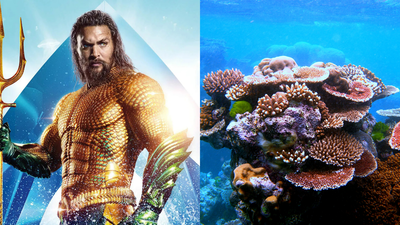
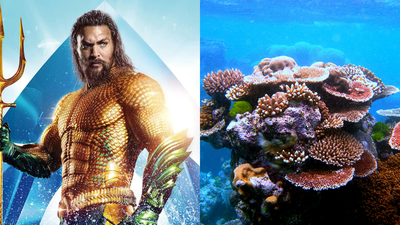
From portraying the ocean superhero Aquaman to advocating for marine conservation, Jason Momoa has made ocean protection a central part of his public work. The actor and United Nations Environment Programme (UNEP) Advocate for Life Below Water has warned about the growing threats facing coral reefs, which support marine biodiversity, coastal communities and cultural traditions. His concerns come as scientists document the unprecedented scale of the fourth global coral bleaching event. Rising sea temperatures, pollution and human activity are placing coral ecosystems under increasing stress. As marine heatwaves become more frequent, the damage to reefs is raising questions about their long-term survival and the future of communities that depend on healthy oceans.
Jason Momoa highlights the cultural importance of coral reefs
In an opinion article published by The Guardian on 17 April 2026 and republished by UNEP, Momoa discusses the environmental and cultural significance of coral reefs in Hawai‘i. He explains that reefs help feed families, protect coastlines and remain closely connected to Hawaiian traditions. Momoa also warns that climate change, pollution and other human activities are weakening these ecosystems. His concerns reflect scientific projections that show how vulnerable coral reefs are to rising global temperatures. According to UNEP, up to 90% of coral reefs could disappear by 2050 under 1.5°C of global warming, while losses could reach 99% at 2°C.
Fourth global coral bleaching event affected 84.4% of reef area
The National Oceanic and Atmospheric Administration (NOAA) confirmed the fourth global coral bleaching event on 15 April 2024. According to NOAA Coral Reef Watch, bleaching-level heat stress affected approximately 84.4% of the world’s coral reef area between 1 January 2023 and 30 September 2025. Mass bleaching was documented in at least 83 countries and territories across the Pacific, Atlantic and Indian oceans. In an update published on 2 June 2026, NOAA said the global event likely ended in mid-2025. However, the agency noted that identifying the beginning and end of global bleaching events is becoming increasingly difficult as coral reefs experience heat stress more frequently.
Why rising ocean temperatures cause coral bleaching
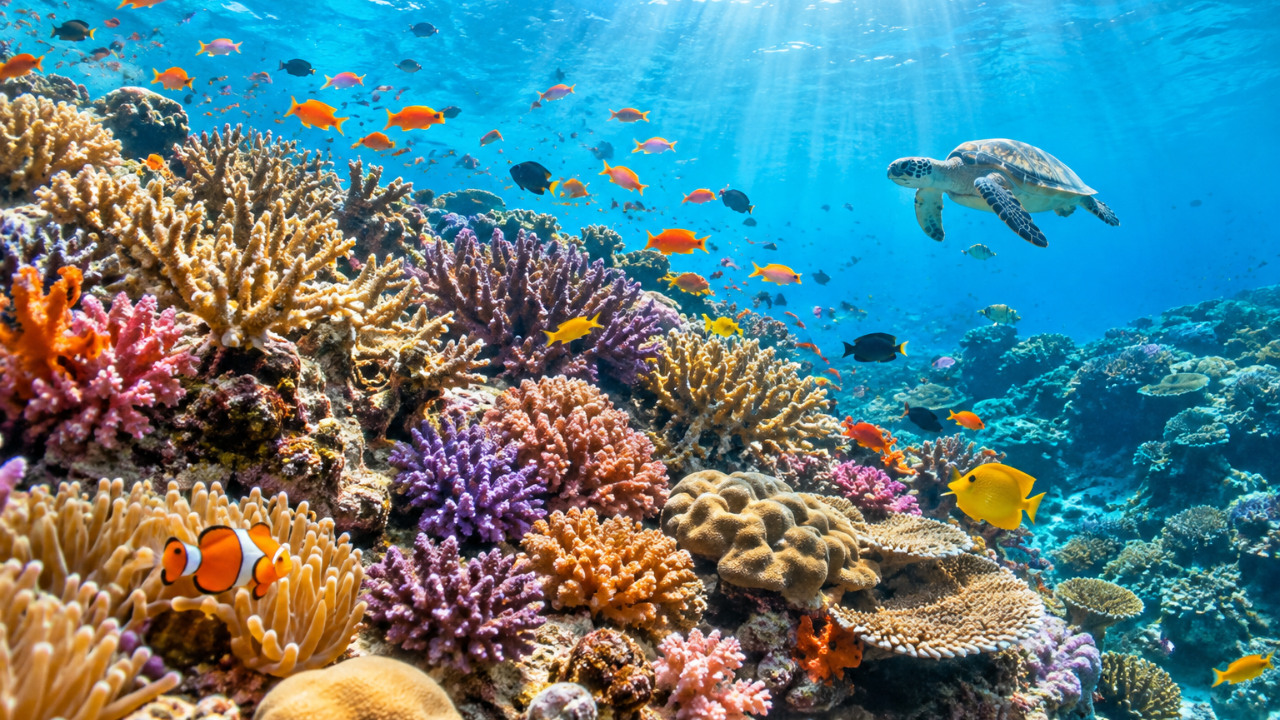
Coral bleaching occurs when corals experience prolonged environmental stress, particularly unusually warm seawater. Corals live in a relationship with microscopic algae called zooxanthellae. These algae provide energy through photosynthesis and give corals much of their colour. When ocean temperatures rise beyond a coral’s tolerance level, the coral may expel the algae, causing it to turn white. Bleaching does not automatically mean that a coral has died. Some colonies can recover if temperatures return to normal conditions. However, prolonged stress can cause starvation, disease and death. The extent of the damage depends on factors such as the duration of heat exposure, coral species and local environmental conditions. Repeated bleaching can leave reefs with insufficient time to recover between heatwaves.
Research points to increasingly frequent bleaching
A study published in Coral Reefs in January 2026 examined coral heat stress between 1985 and 2025. Researchers found that an uninterrupted period of global coral heat stress from 2018 to 2025 affected 87% of reef areas worldwide, the highest proportion recorded in the study. The researchers also reported that median heat stress accumulation across reef areas was nearly 50% greater than during the previous global bleaching event record. Their findings suggest that coral reefs are entering an era of more frequent bleaching, reducing the recovery time between major disturbances. The study examines the wider period of persistent heat stress, which is distinct from NOAA’s assessment of the fourth global bleaching event. This distinction matters because individual reefs can continue to experience damaging heat even after a specific global event has ended.
Climate change threatens coral reef survival
Coral reefs are particularly sensitive to changes in ocean temperature. The Intergovernmental Panel on Climate Change (IPCC) has warned that reef-building corals face substantial losses even at 1.5°C of global warming above pre-industrial levels. The risks increase significantly as temperatures rise further. The projections cited by UNEP describe the potential decline of reef ecosystems rather than a fixed date when all corals will disappear. Coral responses differ according to species, location, water conditions and the length of exposure to heat stress. Some corals may survive or recover under favourable conditions, but widespread and repeated disturbances can reduce biodiversity and weaken the structure of reef ecosystems.
Pollution and overfishing increase reef pressure
Higher ocean temperatures are not the only threats facing coral reefs. In his article, Momoa identifies plastic pollution, coastal development, agricultural runoff and overfishing as additional sources of damage. Plastic waste can injure coral colonies, while sediment and pollutants from construction and farming can reduce water quality. Overfishing can disrupt marine food webs and affect species that play important roles in maintaining reef health. These pressures often occur alongside climate-related stress, making recovery more difficult. Measures such as reducing pollution, protecting coastal habitats and improving fisheries management can help strengthen reef resilience. However, local conservation efforts must be supported by action to reduce global greenhouse gas emissions.
Coral reefs support biodiversity and coastal communities
Coral reefs provide shelter, feeding grounds and nursery habitats for numerous marine species. Their complex structures support interconnected food webs and contribute to the health of ocean ecosystems. Reefs also reduce wave energy before it reaches the shore, helping protect coastal areas from erosion and storm impacts. Their decline can therefore affect communities that depend on fishing, tourism and other marine activities. In Hawai‘i, Momoa highlights the connection between coral reefs, cultural identity and coastal livelihoods. Their importance extends beyond environmental protection, linking reef health with food security, economic stability and cultural heritage.
Conservation efforts focus on reef recovery
Conservation organisations and scientists are working on coral restoration, reef monitoring and research into heat-tolerant coral species. Projects include coral nurseries, restoration programmes and efforts to identify colonies that may withstand warmer conditions. Restoration can support damaged reefs in suitable locations, but its success depends on water quality, the level of destruction and future environmental conditions. Protecting healthy reefs remains essential because established ecosystems may be more resilient than severely degraded ones. Reducing local pollution, safeguarding marine habitats and managing fishing activities can support conservation efforts. Long-term progress will also depend on limiting the rise in global temperatures.
Global action will shape the future of coral reefs
The fourth global coral bleaching event revealed the extensive impact of ocean heat stress on coral ecosystems. Although NOAA said the event likely ended in mid-2025, research published in 2026 shows that reefs continue to face prolonged and increasingly frequent periods of thermal stress. Momoa’s warning draws attention to the ecological, cultural and economic consequences of coral reef decline. Scientific assessments indicate that protecting these ecosystems requires a combination of climate action, marine conservation and support for coastal communities.The future of coral reefs will depend on how effectively governments, organisations and communities address rising temperatures and local environmental pressures.