Domestic cats can be effective hunters of birds, but a simple change to what they wear may make it harder for them to catch their flying prey. A study of 94 outdoor cats in New York and Florida found that they brought home 61% fewer birds when they wore a brightly patterned fabric collar cover. The same cover did not significantly reduce the number of small mammals they caught. The findings suggest that making cats more visible may work particularly well against prey that can detect bright colours.
How did bright patterned sleeves reduce bird kills by 61%
According to the study published in the Journal of Fish and Wildlife Management, the researchers recorded 373 prey specimens brought home by the cats. These included 92 adult birds representing 35 species, 172 small mammals from 14 species, 99 reptiles, four amphibians, one insect and five unidentified remains.Not every cat caught prey. 79 of the 94 cats brought home at least one animal during the study. Among those cats, 67% captured birds, 75% captured mammals and 30% captured reptiles or amphibians. Some cats caught more than one type of prey. The researchers were able to compare the number of prey returned during periods when the cats wore the colourful cover with the numbers returned when they did not.The difference was clearest for birds. Cats wearing the Birdsbesafe cover brought home 61% fewer birds than they did without it. This meant the result was unlikely to be explained simply by chance. The study found a different pattern for mammals. Cats brought home 37% fewer small mammals while wearing the cover, but that reduction was not statistically significant.
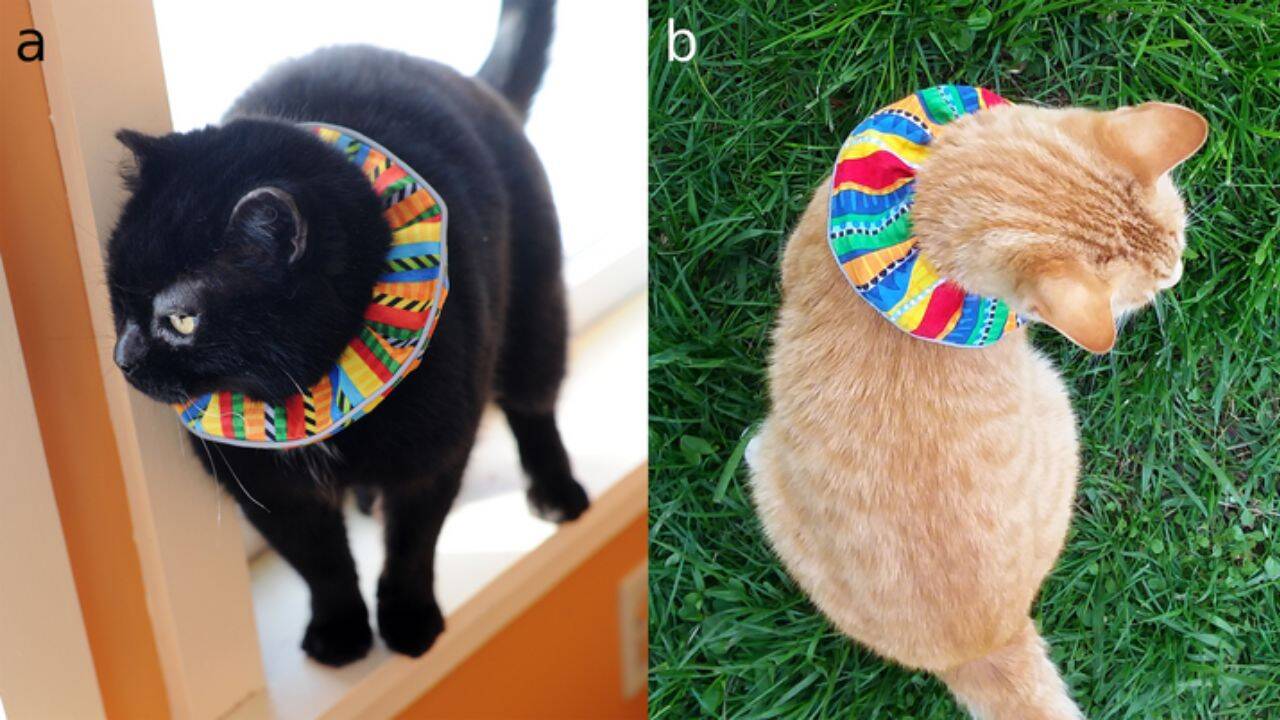
Domestic cats wearing the Birdsbesafe collar cover. Image Credit: Journal of Fish and Wildlife Management
How did scientists collected the sample for this cat experiment
The study tested the Birdsbesafe collar cover, a brightly patterned fabric sleeve designed to fit over a normal breakaway collar. The bright colours were intended to alert birds to the presence of a hunting cat before it got close enough to attack. Rather than changing the cat’s ability or willingness to hunt, the cover was designed to give potential prey more warning.Researchers combined results from three studies carried out during bird breeding seasons. One took place in New York in 2014, while the other two were conducted in New York and Florida in 2019. The cats alternated between periods wearing the cover and periods without it, allowing the researchers to compare how many animals they brought home under both conditions.A total of 118 cats were initially recruited, but 24 were removed from the study because their owners stopped communicating with researchers or became uncomfortable with the collars. The final analysis included 94 cats from 64 households.
Why were birds affected more than mammals
The researchers suggest that the difference may be linked to how birds perceive colour.The cover was specifically designed to make cats more noticeable to birds. Birds can detect colours in ways that make bright patterns potentially useful as warning signals. Small mammals, however, were not affected in the same clear way in this study.The researchers also found that the cover reduced the number of reptiles and amphibians brought home by 47%, but this result was not statistically significant either. The study therefore provides its strongest evidence for reducing bird kills rather than reducing hunting success across all types of prey.This distinction is important because the cover was not found to make cats less successful hunters overall. Instead, its apparent benefit was concentrated among birds.
Colourful collar performs better in some locations than others
The results differed between New York and Florida. In New York, cats wearing the cover brought home 69% fewer birds. In Florida, the reduction was 47%. The researchers found that the cover was more effective at the temperate latitude represented by New York than at the subtropical latitude represented by Florida.The study offers a possible explanation for this difference. During the breeding season, birds at higher latitudes can experience higher levels of testosterone as they establish territories, build nests and raise young during relatively short breeding periods. The researchers suggest that this may also make them more distracted and potentially more vulnerable to predators.The explanation remains a possibility rather than something the study directly proved. However, the pattern in the results was consistent with the idea that the collar cover could work differently depending on where the cats and birds live.
Could the colourful cover be a useful conservation tool
The researchers said that the Birdsbesafe collar cover could be one tool for reducing bird mortality caused by domestic cats.They noted that the 61% reduction found in their combined analysis was within the range reported by earlier studies of the same type of cover. The study also noted that the cover could be particularly useful in places where birds are vulnerable to cat predation, including islands or areas where songbird populations are already carefully managed.There were practical limits also. Among 60 cats whose owners provided collar-comfort information during the 2019 studies, 33 showed no adverse reaction, while eight had strong negative reactions and 19 showed some discomfort before becoming accustomed to the cover. Only 20 owners, or 49%, said they planned to continue using it.For owners looking for a way to make hunting cats more noticeable to birds, the findings suggest that something as simple as a bright pattern around a cat’s collar can make a substantial difference.