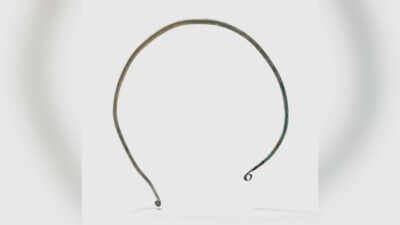
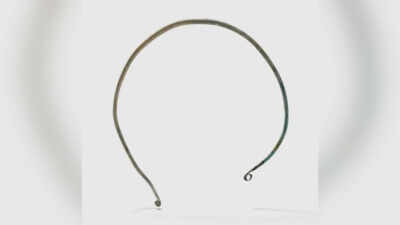
The job of an archeologist is one that requires immense patience to find something worthy of being called a treasure over the years. The Earth’s geomorphic cycle has buried centuries of evidence of life on this planet, which is why one of the best sources of human history has been digging around the suspected archeological sites. At the Lötschen Pass, archaeologists have been digging through the same stretch of mountain for years, and the ground there keeps giving things back. The discoveries began with Roman coins and medieval-age arrows.The epochs of the planet have buried secrets of our evolution into the layers of mud, rock, water and ice. Therefore, materials are not just buried under rugged rocks and mud, but in all kinds of landscapes such as underwater and under huge snow-covered glaciers. This is best seen at the Lötschen Pass, more than 2,600 metres above sea level, where since 2011, melting ice has revealed artefacts from the Bronze Age, including bow, arrows, pieces of leather and a box made of wood chips.Meanwhile, graves at Gwatt, Einigen and Hilterfingen have yielded neck jewellery from the same era, worn by men and women. In mid-October 2026, a team from the Archaeological Service of the Canton of Bern found one more piece for this record: a bronze neck ring about 4,000 years old, making it the first Early Bronze Age jewellery ever recorded on the pass.A valuable walkStaff from the Archaeological Service, known as the ADB, regularly walk high-altitude sites to check for prehistoric objects, and the ring turned up on one of those inspection rounds. According to the canton, it is the first larger metal object from prehistory found on the pass.The ring dates to the Early Bronze Age, between 2000 and 1700 BCE. It measures about 13 centimetres in diameter and ends in two small loops shaped like eyelets. The metal is thin, yet after thousands of years in nature, the piece is in surprisingly good shape.The team measured where it lay, documented it and lifted it out with care. It was then taken to the ADB laboratories in Bern, where conservators are treating it now. The Directorate of Education and Culture of the Canton of Bern announced the discovery on Wednesday, 18 November.Why this ring is a firstThe Lötschen Pass sits on the border between the Bernese Oberland and the canton of Valais, and archaeologists have worked there for some time. Since 2011, the melting ice has also given up a Bronze Age bow, arrows, pieces of leather and a box made of wood chips. These organic objects stayed preserved in the ice for centuries, and warming temperatures have exposed them.However, the neck ring is a special discovery for three reasons. First, it lay away from places where the earlier finds have been made. Second, it is the first bronze object recorded on the pass. And lastly, it is the first piece of Early Bronze Age jewellery found there.Mobility through the Alpine passesNeck jewellery like this has turned up before, though in graves rather than on a mountainside. Similar pieces come from the burials of men and women from the same period at Gwatt, Einigen and Hilterfingen, all in the canton of Bern. Sites from the era also exist south of the Bernese Alps in Valais.The Canton of Bern has concluded the Lötschen ring as evidence that people in prehistory moved over long distances, and that Alpine passes have been walked for thousands of years. The pass connects the two regions where these related finds were made.A lost treasure or an intentional oneThe researchers do not think the ring was lost. They suspect someone placed it on the pass on purpose. The canton lists three possible reasons: an offering to a deity, a request for a successful journey, or thanks for one that ended well. Nobody can say which it was, and the announcement does not claim to know.