
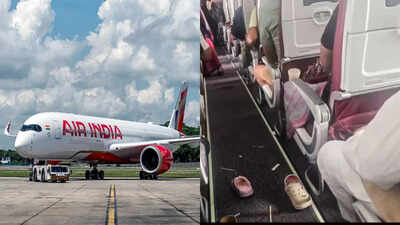
Air India on Friday said it had terminated the employment of the Pilot-in-Command of its Phuket-Delhi flight after he tested positive for a psychoactive substance.“The Pilot-in-Command of the Phuket-Delhi flight tested positive for a psychoactive substance. In line with Air India’s zero-tolerance approach to violations of safety, fitness or regulatory requirements, the pilot’s employment has been terminated with immediate effect,” an Air India spokesperson said.The action follows a preliminary report by the Aircraft Accident Investigation Bureau (AAIB) into an August 4 incident involving Air India flight AI-2379, which found the Pilot-in-Command’s psychoactive substance test non-negative in confirmatory testing.
Pilot tested non-negative in confirmatory test
According to the AAIB’s preliminary findings, both pilots underwent post-flight medical checks after the aircraft landed in Delhi. Their breath analyser tests were satisfactory.However, the Pilot-in-Command’s sample was found non-negative in a psychoactive substance detection test. A subsequent confirmatory blood test was also found non-negative, while the co-pilot tested negative.The AAIB said the confirmation of the use of a psychoactive substance was a “serious concern” and recommended that the Directorate General of Civil Aviation take appropriate action on priority to prevent abuse of such substances.The preliminary report did not establish that the substance finding caused the altitude upset. The detailed investigation into the technical and other aspects of the incident remains underway.
Multiple hydraulic failures during flight
The Airbus A320 was cruising at 36,000 feet when its flight-control system detected a loss of pressure in the green hydraulic system at 04:02:43 UTC, according to the AAIB preliminary report.Four seconds later, the system detected losses in the blue and yellow hydraulic systems. The autopilot disengaged at 04:02:48 UTC, followed by a stall warning that lasted two seconds.The co-pilot, who was the pilot flying, initially responded before the Pilot-in-Command took over the controls. During the altitude upset, the aircraft gained 372 feet and then fell 292 feet from its assigned flight level.The blue hydraulic system recovered at around 04:02:52 UTC, followed shortly by the yellow and green systems, restoring the flight-control surfaces and returning the aircraft to normal operating condition.
Passengers and crew injured
The seat-belt signs were off when the altitude upset occurred, resulting in injuries to passengers and cabin crew.On landing in Delhi, 20 passengers and four cabin crew members received medical attention.Twenty people were discharged after treatment for minor injuries, while four people with serious injuries were hospitalised.The flight crew assessed the situation and decided to continue to Delhi rather than divert to the nearest en-route airport. The aircraft later requested medical priority from Delhi Air Traffic Control and landed safely at IGI Airport at 05:30 UTC.The incident also caused significant damage inside the cabin, including cracked and deformed ceiling panels, dislocated passenger-service-unit panels, broken handrails and dislodged overhead-bin doors.The AAIB said its detailed investigation remains in progress. Flight recorders, maintenance and operational records, hydraulic components and samples, as well as other material, are being examined.