She who has no name, no identity and no parents to tell her story. Yet, more than 2,000 years after her death, the remains of a young woman, discovered in a Northern Ireland bog, are revealing fragments of a life that time had nearly erased.The only thing we knew about her was that she was a woman. No name, no family history, no account of the life she lived or the circumstances that led to her death. Even after more than 2,000 years, her identity remains unknown. There is something deeply unsettling about how little of her story has survived, particularly when the history of ancient societies has so often been pieced together through the lives, achievements and accounts of men. Now, through an unusual investigation in Belfast, researchers are attempting to give a voice to a woman whose story was never recorded, using the few physical traces she left behind.According to National Museums NI, which led the research into the discovery, the remains were initially believed to belong to a female aged between 13 and 17. However, further osteoarchaeological examination revealed that the individual was most likely a young woman aged between 17 and 22. Dating back to the Iron Age, between 343 BCE and 1 BCE, the remains were discovered in October 2023 near Bellaghy in County Derry, Northern Ireland. Following the discovery, she was named the Ballymacombs More Woman, after the townland where her remains were found, in keeping with the naming convention used for similar archaeological discoveries.
Piecing together the life she left behind
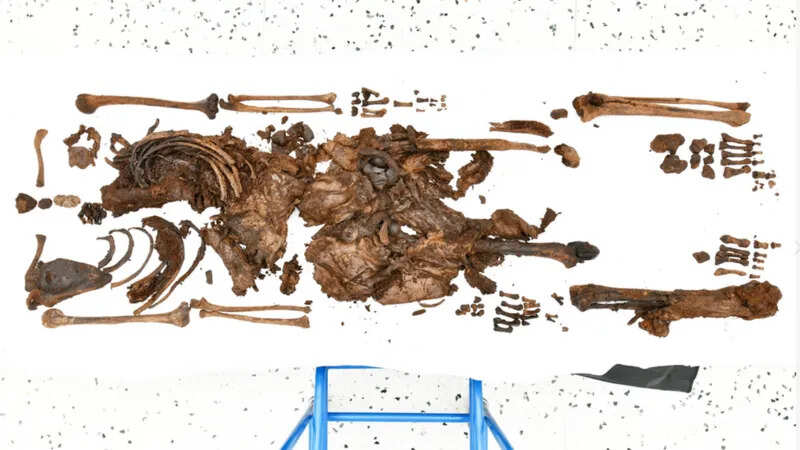
2000 years old headless woman (Image courtesy of PSNI)
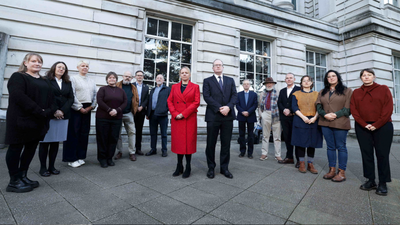
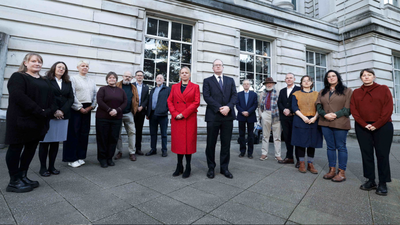
“It was an honour to undertake the osteological analysis of Ballymacombs More Woman and to be able to reconstruct the last moments of her life and what happened to her body when she died,” said Professor Eileen Murphy of Queen’s University Belfast, who conducted the examination of the remains. The findings were presented at a special coroner-style investigation held at the Ulster Museum in Belfast, bringing together archaeologists, forensic specialists and researchers to piece together the story of the young woman who lived more than 2,000 years ago.The investigation established that the woman was between 15 and 22 when she died during the Iron Age. Scientific analysis showed that she had been deliberately decapitated, most likely from behind with a bladed weapon. While the precise circumstances of her death remain unknown, researchers suggested that it may have been connected to ritualised killing or sacrifice, a practice associated with several Iron Age bog bodies discovered across north-western Europe.But the investigation was not limited to the circumstances of her death. Researchers used advanced techniques, including micro-CT scanning, digital mapping and 3D imaging, alongside specialist examinations of her bones, hair, skin and nails. These techniques have helped researchers piece the mosaic together, one part at a time. They also helped establish details about her diet, health, physical condition and appearance, offering a rare glimpse into the life of an individual from the Iron Age.
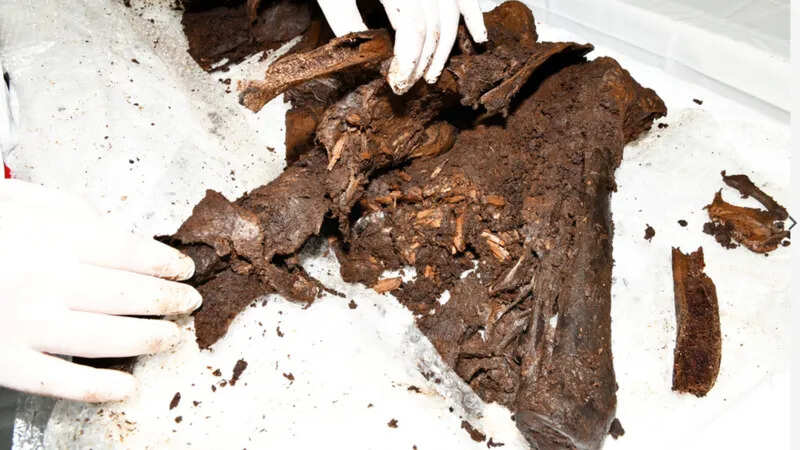
The remains of 2000 years old headless Woman (Image courtesy of PSNI)
Professor Murphy said the scientific study had yielded a significant amount of information about the young woman and contributed to a better understanding of Iron Age people in Ireland. The investigation also sought to approach the remains with care, recognising that the discovery was not simply an archaeological specimen but once belonged to a living person who was part of a community.
What the evidence reveals about her final moments
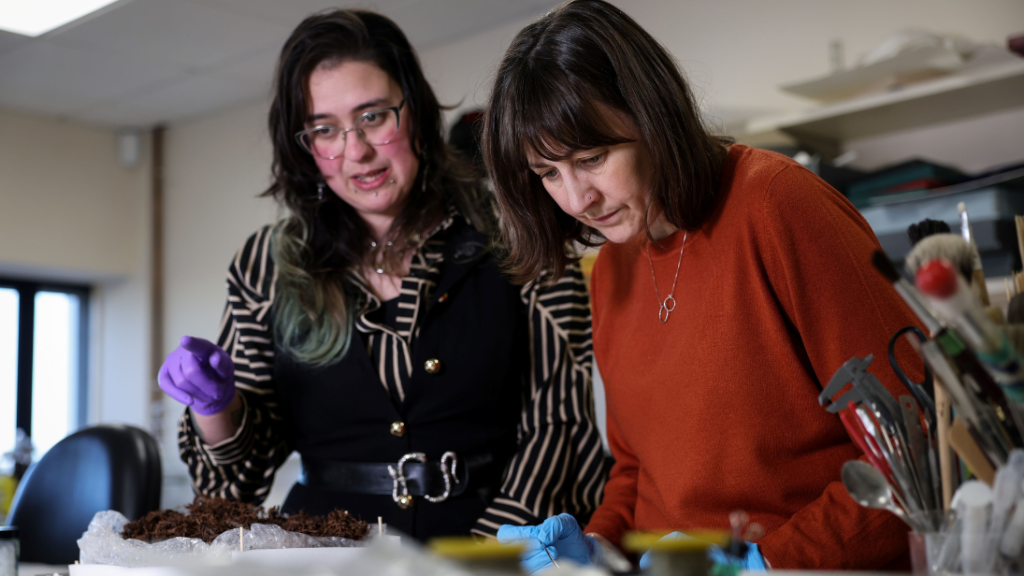
Jen Gossman, Conservation specialist at National Museums NI, and Niamh Baker, Curator of Archaeology examining the woven artefact found with Ballymacombs More Woman. (Ulster Museum Official site)
The bog preserved what time would otherwise have taken away, but it could not preserve the full story of how she died. What researchers found, however, offered some disturbing clues. An examination of her remains revealed that the young woman had been deliberately decapitated, most likely by a sharp-bladed weapon used from behind. The nature of the injuries suggests that her death was violent, although the exact circumstances surrounding it remain unknown.Researchers have considered whether she may have been the victim of a ritual killing or human sacrifice, a possibility often discussed in connection with Iron Age bog bodies found across north-western Europe. Such discoveries have led archaeologists to examine the relationship between bog burials, violence and ritual practices in ancient societies. However, without further evidence, it is difficult to establish why she was killed or what role she may have held in the community she belonged to.Her remains also offered clues about the world she inhabited. The condition of her bones, together with scientific analysis of her hair, skin and nails, helped researchers investigate her diet, health and physical condition. Each finding added another small piece to the picture, turning what initially appeared to be an unidentified set of human remains into evidence of an individual life.More than two millennia after her death, the Ballymacombs More Woman still has no known name or family history. Yet the investigation has made it possible to understand something about the person behind the remains. Her story may never be complete, but the evidence she left behind has ensured that she is no longer simply an unknown woman preserved in a bog.