

Curtains can change the appearance of a room without requiring a complete makeover. A plain window can become more colourful or decorative with simple materials that are already available at home. Old sarees, leftover fabric, flat sheets, and kitchen towels can all be turned into curtain panels.Those who enjoy craft projects can also add pom-poms, ribbons, painted patterns, or handmade prints to plain curtains. Some designs need basic stitching, while others can be made without sewing using clips and fabric glue. The choice can depend on the room, available materials, and the amount of light and privacy needed.
10 creative ways to turn old sarees and fabrics into curtains
1. Turn an old saree into a colourful curtain
An old or unused saree can become a striking curtain without needing much decoration. Sarees often already have borders, prints, or detailed patterns that can work as the main visual feature. Lightweight sarees can also allow plenty of natural light to filter through the window. The fabric can be selected according to the colours already present in the room. A saree with a decorative border can be positioned so the border runs along the edge or bottom of the curtain.
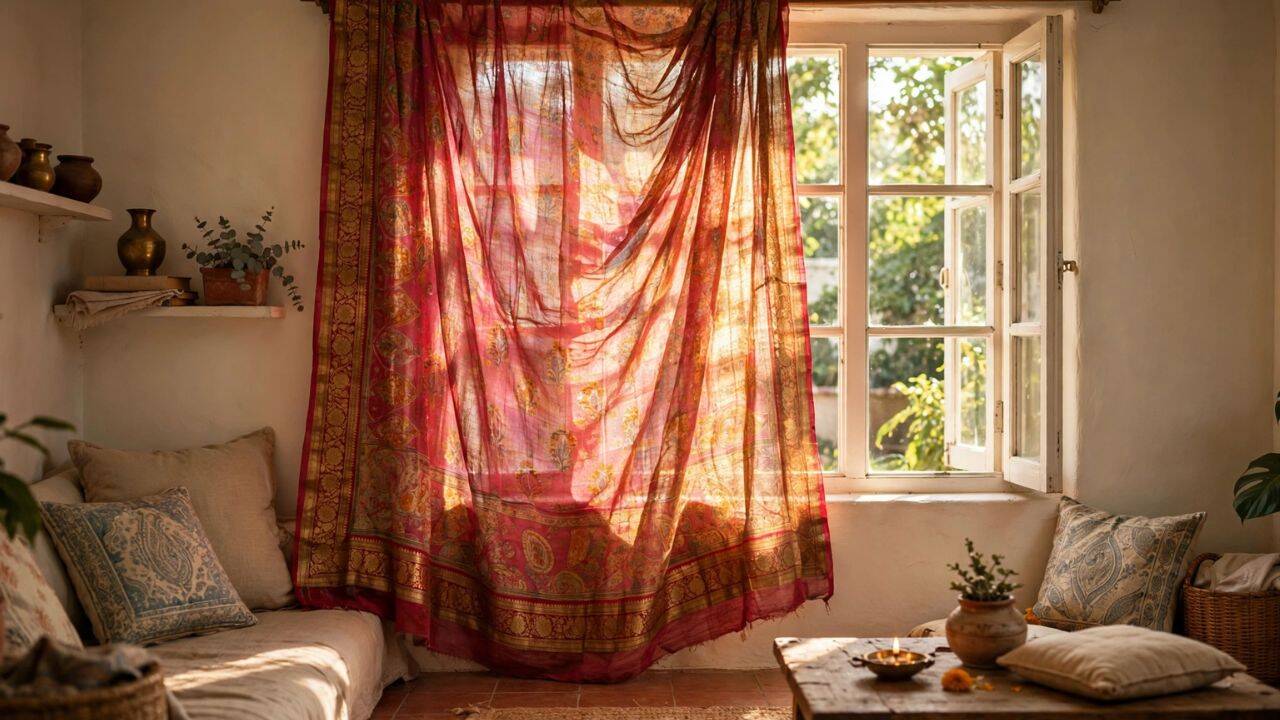
PC: AI Generated
2. Create a handmade macrame curtain
Cotton cord can be used to make a macrame curtain for a window or doorway. The cord can be arranged into knots, geometric patterns, or cascading fringe to create a textured hanging design. It can also work as a decorative divider between two areas of the home. The design can be kept simple with repeated knots or made more detailed with different patterns. Natural-looking cord can create a relaxed appearance, while coloured cord can introduce another layer of decoration.
3. Add a lace panel to plain curtains
Lace can give a simple curtain a softer and more decorative appearance. Instead of replacing the entire curtain, a lace panel can be added to the bottom or centre of an existing fabric panel. A larger piece of lace can also be used as the main curtain material.The patterned surface creates visual detail while allowing diffused light to enter the room. This approach can work well when a window needs a lighter decorative covering. Lace can also be paired with a plain curtain in a similar shade so that the pattern remains noticeable without making the window appear too decorative.
4. Decorate curtains with colourful pom-poms
Pom-poms can turn an ordinary curtain into a more playful window decoration. The trim can be stitched or glued along the outer edges, bottom hem, or selected sections of an existing curtain. Matching colours can create a coordinated appearance, while contrasting shades can make the decoration stand out.This idea is useful for existing curtains that fit the window well but need a little more colour and detail. Pom-poms can add a small cheerful touch and texture without changing the main fabric.
5. Make a beaded curtain for a doorway
A beaded curtain can be created by threading wooden, acrylic, or colourful beads onto strong cords. Several strands can then be arranged closely together and attached to a suitable support. Unlike a fabric panel, the individual strands move as people pass through them. Different bead colours and shapes can also create a decorative feature. This idea is useful when the aim is to divide spaces without completely closing them off.
6. Stitch leftover fabric into a patchwork curtain
Small pieces of unused fabric can be joined together to create a curtain. Different prints, colours and textures can be arranged into one larger panel. A patchwork curtain can bring together different colours, patterns and fabric pieces. Colours that work well together can make the design look neat and balanced. This is also a simple way to use leftover fabric scraps instead of leaving them unused. Larger pieces can create a simple design, while smaller pieces can add more detail. Once the pieces are stitched together, the panel can be hung like a regular curtain.
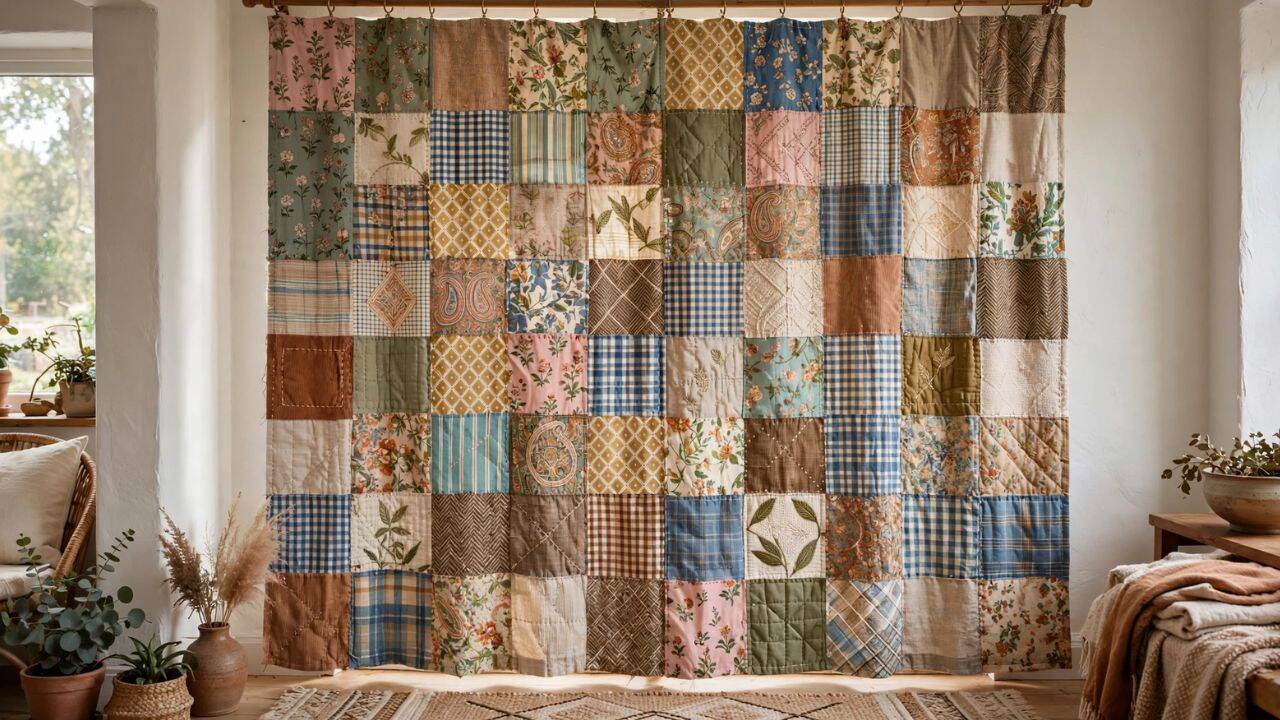
PC: AI Generated
7. Make a block-printed curtain
Plain cotton fabric can be transformed into a patterned curtain with fabric paint and printing blocks. Simple motifs such as leaves, flowers, dots, and geometric shapes can be repeated across the fabric. A border can also be added around the edges to give the panel a finished appearance.The design can be kept consistent by placing each print at similar intervals, or the motifs can be arranged more freely for a handmade effect. Block printing allows the colours and pattern to be chosen specifically for the room.
8. Try an ombre or tie-dye curtain
A plain white or light-coloured curtain can be given a new appearance with dye. For an ombre effect, the fabric can be dipped gradually so the colour becomes lighter across the panel. Another option is to fold, twist, or knot sections of the fabric before applying dye to create an uneven tie-dye pattern.These methods can turn a basic fabric curtain into a more artistic window covering. The colour can be selected to complement the room’s existing palette.
9. Use ribbons to refresh an existing curtain
A plain curtain can be given a fresh touch with decorative ribbons instead of replacing it. A wide ribbon can be attached along the bottom or outer edges to create a neat border. Several narrow ribbons can also be placed across the fabric to create stripes.Matching ribbons can keep the design simple, while contrasting colours can make the curtain stand out. This is an easy way to refresh an existing curtain when the fabric still works well in the room. Ribbons can add colour and detail without the need for a new panel.
10. Turn an unused and simple bed sheet into a simple curtain
An unused and simple bed sheet can work as a practical curtain panel, especially for those looking for a simple and budget-friendly option. The bedsheet can be hung using clip rings or by a small opening for the curtain rod. Sheets with flowing patterns or interesting textures can add visual detail without requiring complicated sewing.This option also makes it easier to change the room’s appearance when the decor changes. A suitable sheet can be selected according to the window size and the room’s colour scheme. With a few basic adjustments, an ordinary household sheet can become a functional window covering.