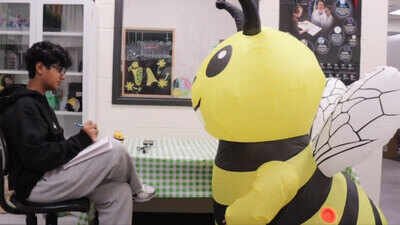
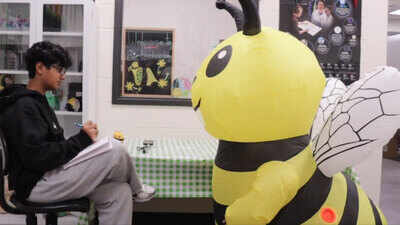
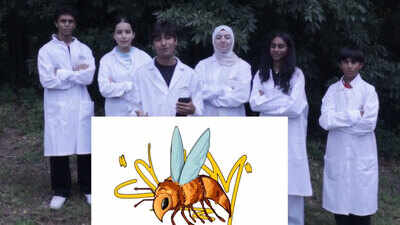
A team of students from Lambert High School in Georgia, US, has won the High School Grand Prize at the 2026 International Genetically Engineered Machine (iGEM) competition for developing a biological approach to protect honeybee colonies from parasites and the viruses they spread. Their project, titled SWARM: Protecting the Hive, secured the top honour at the international competition held in Paris from November 13 to 16, where 152 high school teams from across the world participated.The project addresses two major threats to honeybee populations: Varroa destructor mites and the deformed wing virus, which is transmitted by these parasites. Along with the Grand Prize, the Lambert team received a gold medal and four additional honours, including Best Model, Best Wiki, Best Sustainable Development Impact and the Village Award for Conservation.
How students developed a biological defence for honeybees
The SWARM project brings together two innovative biological strategies to address the growing threats to honeybee colonies.The first approach involves an engineered minibinder developed to neutralise the deformed wing virus, while the second uses RNA interference (RNAi) to disrupt genes that are essential for the survival of Varroa mites.Varroa mites are among the most destructive parasites affecting honeybee populations. Not only do they weaken bees by feeding on them, but they also act as carriers of viruses that can contribute to the decline of entire colonies. By targeting both the parasite and the virus it spreads, the students sought to develop a more comprehensive and effective strategy for safeguarding honeybee populations.Beyond the scientific aspect, the team also placed emphasis on education and public outreach, raising awareness about the importance of honeybee health and its wider implications for food security, pollination and sustainable agriculture.
Lambert team among global finalists at iGEM 2026
The Grand Prize was one of several recognitions received by the students at the Paris competition. The team secured a place among the global Top 10 and was one of only two high school teams shortlisted as Grand Prize finalists.The achievement also continues Lambert High School’s strong performance at the international synthetic biology competition. In 2025, its team developed a CRISPR-based project for Lyme disease detection, finishing in the global Top 10 and receiving the Best Software Tool award. The project also attracted attention from CBS News’ 60 Minutes, and the team was subsequently recognised by the Georgia House of Representatives.
Another school from Forsyth County wins silver
Forsyth County had another achievement at the competition, with Denmark High School winning a silver medal in its first iGEM appearance.Its project, ECLIPSE, explored how computer modelling could accelerate diagnostic test development, using malaria as a case study.The two schools’ performances highlight the growing role of school-level science and synthetic biology projects in encouraging students to address challenges in healthcare, agriculture and environmental sustainability.