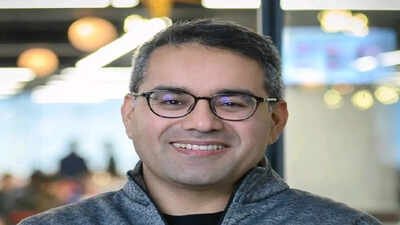
Louis Pasteur, the French chemist whose work on microbes gave pasteurisation its name, told an audience at the University of Lille in 1854 that chance favours only the prepared mind. The line has outlived most of the lectures delivered in its century, and it perhaps explains why a rejected visa petition, a setback that derails many careers, set one in motion for Kunal Bahl.Rejection is rarely a founder’s first choice of launchpad. Yet in 2007, it was the only one on offer.
A degree built for builders
Bahl studied at Delhi Public School (DPS), R.K. Puram, before moving to the University of Pennsylvania. There he enrolled in the Jerome Fisher Program in Management and Technology, which Snapdeal’s own profile of its co-founder describes as the route to degrees in engineering and business, followed by an executive marketing programme at the Kellogg School of Management.He joined Microsoft as a full-time employee in October 2006, after an internship with the company.
The decision that shaped everything
Bahl had the degree. He had the employer. He lacked only the visa.His H-1B petition was rejected in June or July 2007, as his temporary work authorisation in the United States (US) neared its end. The decision surprised him, not least because he worked for one of the world’s biggest technology companies. Microsoft offered to move him to its India office and to let him reapply after 12 months.Microsoft offered a way back to the US in a year. Bahl chose a way forward instead.“I felt liberated because I didn’t have to worry about visas or Green Cards,” he told Business Insider. By then, the paper reported, he had already been weighing entrepreneurship, and he resolved that if he returned to India, he would work for himself. “Entrepreneurship was always on the cards for me. An H-1B rejection just fast-tracked it,” he said in the same interview.
From a basement office to Snapdeal
Bahl called his high-school friend Rohit Bansal, then employed at a financial institution, and asked if he wanted to start a business together. The two had discussed the idea as students and agreed quickly, Business Insider reports.Their company was incorporated on 12 September 2007, a few days before Bahl landed in India. The founders put in about $60,000 from personal savings and began with a physical coupon-book business. They then moved to online couponing and later built Snapdeal, one of the earlier e-commerce platforms in India, the publication said. Snapdeal’s profile of Bahl dates the founding of the platform to February 2010.The conditions were not generous. Business Insider quoted Bahl as saying that internet penetration and smartphone adoption were limited in 2007, digital payments were not widespread, and angel investors were hard to find. The founders worked from a small basement office in a residential building in Delhi’s furniture market and stayed with their families to save on rent and food.
The investor’s chair
In 2011, the pair turned to startup investing and set up Titan Capital. Over 15 years, the firm has backed more than 320 startups, among them Ola and Urban Company. Snapdeal’s profile also lists Razorpay and Mamaearth among its investments.The founders went on to build businesses that became two publicly listed companies, according to the same report. Bahl is now associated with AceVector, the parent company of Snapdeal, Unicommerce and Stellaro Brands, and he sits as a judge on Shark Tank India, where entrepreneurs pitch to investors.The recognition followed. Snapdeal’s profile records that he was ranked 25th on Fortune’s 40 Under 40 list in 2014, received the Joseph Wharton Award for Young Leadership in 2018 and won the Economic Times Comeback Award in 2019.
A fortunate turn, though not an easy one
Bahl does not dress the episode up as painless. He told Business Insider that the experience hurt at the time, even as he called it “serendipitous” in hindsight. He also acknowledged that returning to India is not equally easy for everyone facing immigration trouble in the US, and that it was simpler for him because he was unmarried.India today, he argued, offers wider internet and smartphone access, a larger pool of skilled professionals, more coworking spaces, a stronger funding ecosystem and greater government support for startups. “There is no better time to come back,” he said.In other words, the door that closed in 2007 did not lead to a lesser room. It led to the one Bahl was already preparing to enter.