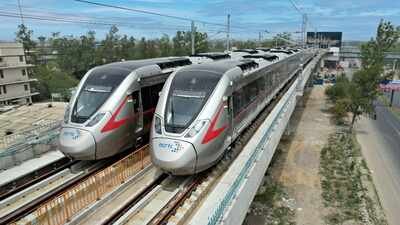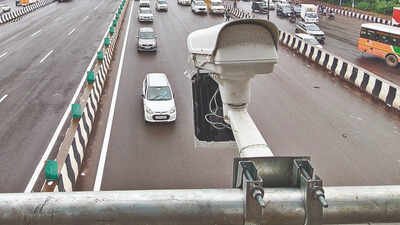
New Delhi: All future national highway projects, including those where construction is yet to begin, will have toll plazas with not more than eight lanes, as NHAI has made Multi-Lane Free Flow (MLFF) tolling an integral part of highway development. The move will reduce land acquisition requirements and save public money, as electronic toll collection equipment will be mounted on overhead gantries instead of requiring multiple tolling lanes and booths.At present, several toll plazas on six- and eight-lane highways, particularly around major cities, have over 20 lanes and in some cases this goes up to 32 lanes. In conventional tolling systems, more tolling lanes were required to clear vehicles queuing up at toll gates.“For all practical reasons, there will be no need to acquire any extra land for toll plazas. The tolling system using gantry-mounted high-performance RFID readers and Automatic Number Plate Recognition (ANPR) cameras to identify vehicles in motion and deduct the applicable toll through FASTag will be installed on the highway,” said an official.The revised design seeks to rationalise the number of tolling lanes by increasing the vehicle-handling capacity of each lane. NHAI has estimated the throughput of each lane at 600 vehicles per hour while prescribing the new configuration. An additional over-dimension or spare lane will also be provided to handle emergencies.The circular also lays down safety and infrastructure requirements, including a minimum six-metre clearance for gantry-mounted equipment, advance signage, variable message signs around one-km before the plaza and adequate high-mast lighting. Toll plazas will, wherever feasible, be located on straight stretches of highways.The policy will apply to highway projects at different stages of construction. Projects still under the detailed project report (DPR) stage will incorporate the new layout in their bidding documents. For projects already awarded or under construction where toll plaza construction has not started, the revised design will be adopted through changes in the scope of work.NHAI has directed all regional officers, project implementation units and DPR consultants to incorporate the new provisions in upcoming projects and ensure their adoption in ongoing projects wherever applicable. The revised policy supersedes the earlier toll plaza design guidelines for four-lane and wider highways, while two-lane highways with paved shoulders will continue under the existing tolling system.