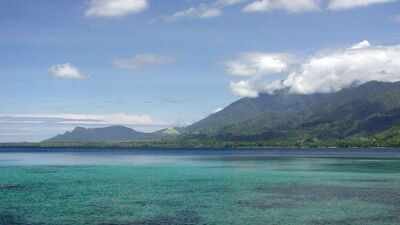
A rock found on Goodenough Island in Papua New Guinea has preserved evidence of an unexpected change in thermal gradient as it sank deep beneath Earth’s surface. Researchers estimate that the rock travelled more than 90 kilometres into a subduction zone about 4.4 million years ago. Its mineral record indicates that the journey began under relatively warm conditions before shifting to a colder thermal regime at greater depth.According to the research published by the University of Göttingen in Nature Geoscience, ‘Geothermal gradient change during subduction recorded by ultrahigh-pressure eclogite’, researchers examined an ultrahigh-pressure eclogite and identified tiny inclusions of coesite, a mineral formed under extreme pressure.
Mineral evidence traces the rock’s journey more than 90 kilometres underground
The rock’s mineral inclusions helped researchers reconstruct its journey. The team found tiny grains of coesite trapped within garnet crystals. Coesite forms under extremely high pressure, making it evidence that the rock reached depths of at least 90 kilometres. Zircon inclusions helped establish that the ultrahigh-pressure stage occurred about 4.4 million years ago.According to the research published by the University of Göttingen, the sample was collected from Goodenough Island in eastern Papua New Guinea. The rock, known as eclogite, formed as a crustal fragment was carried down into a subduction zone, where one tectonic plate moves beneath another. Researchers used mineral analysis, temperature estimates and modelling to reconstruct changes during the rock’s descent. Its record preserved evidence of conditions that would otherwise be difficult to observe directly.
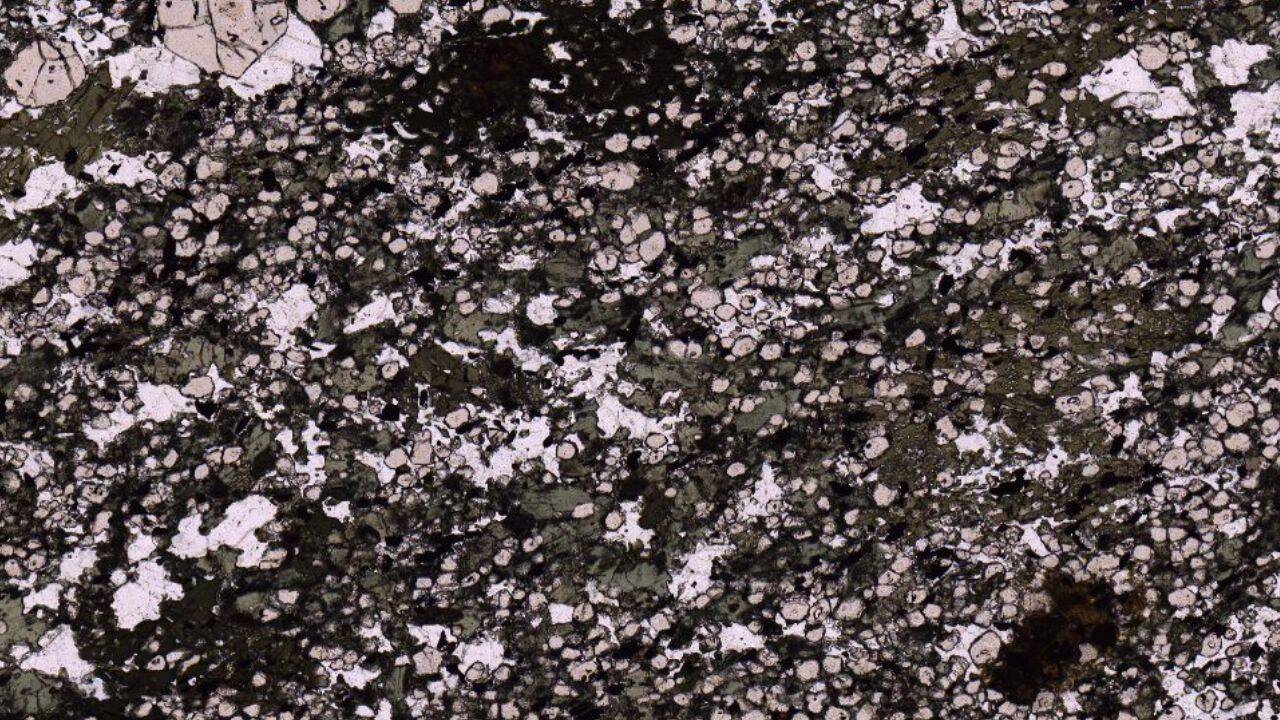
PC: University of Göttingen
The rock records a shift from a warm to a cold thermal regime as it sank deeper
The study found that the rock initially descended under a warmer thermal gradient than scientists would typically expect in a modern subduction zone. The researchers estimated an average gradient of about 470°C per gigapascal until the rock reached a depth of roughly 45 kilometres. After that point, it entered a colder thermal regime as it continued deeper.At its final depth, the rock experienced temperatures of around 800°C. Temperatures at around half that depth were only about 100°C lower. This sequence is important because the rock records both stages, rather than only the conditions reached at the deepest point of its journey.
What happens to rock temperatures during deep subduction
Ultrahigh-pressure rocks are commonly treated as evidence of cold subduction, but the peak conditions they preserve do not necessarily reveal the full path they took to reach those depths. In this case, the mineral evidence showed that the rock had first experienced warmer conditions before entering a colder regime.The authors argue that high geothermal gradients at shallower levels of deep subduction systems might be common. Their findings challenge the use of a rock’s peak metamorphic conditions alone to infer the thermal structure of a subduction zone and the conditions during its earlier descent.
How plate movement may have generated heat at shallow depths
The researchers suggest two possible explanations for the shift in thermal gradient. Heat may have been generated by shearing stress where the tectonic plates meet, making the shallow part of the subduction zone warmer than expected.Alternatively, the subduction zone may have been young and not yet developed the colder conditions typical of mature systems. Both processes may also have contributed. The study does not establish one explanation as the only cause.According to researchers, better understanding of how temperature changes during subduction is important because these zones are linked to earthquakes and volcanic activity. They also help recycle materials, including carbon dioxide, and contribute to Earth’s long-term climate regulation.