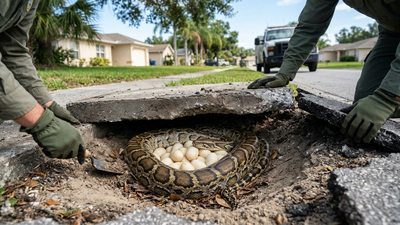
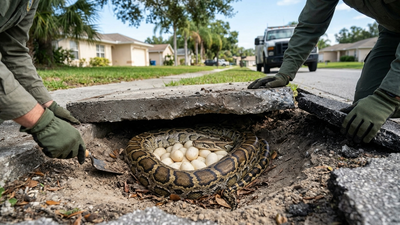
A patch of pavement in South Florida offered an unlikely hiding place for a Burmese python during the busiest part of the species’ nesting season. The snake was discovered beneath a sidewalk, where it was guarding 20 eggs, after a passer-by noticed movement under the concrete. The encounter drew attention to the places where the invasive reptiles can settle, including areas close to residential neighbourhoods. For wildlife contractors working across the region, such discoveries are part of a wider effort to contain a population that has spread through Florida’s waterways and surrounding habitats. The number of eggs also raised a familiar concern: a single female can produce far more offspring than this.
Burmese python nest discovered beneath a Florida sidewalk
The python was spotted when a man walking nearby noticed something moving beneath the sidewalk. Closer inspection revealed the snake sheltering under the concrete, with a clutch of eggs nearby. Guillermo Tapanes, a contractor working with the South Florida Water Management District, became involved in the discovery.The location offered a reminder of how difficult it can be to predict where the reptiles will turn up. Burmese pythons are frequently associated with the canals and wetlands of South Florida, which provide routes through the landscape and access to prey. Yet the snake beneath the pavement had found shelter in a setting more commonly associated with people than wildlife.Tapanes described the encounter as an example of the species’ ability to make use of different surroundings. Its presence beneath a sidewalk also brought the issue closer to home for residents who might assume that nesting activity is confined to remote stretches of the Everglades.
20 eggs represent only part of a python’s reproductive capacity
Although a clutch of 20 eggs may appear substantial, it is relatively modest for a large female Burmese python. The snakes can produce dozens of eggs, with particularly large individuals capable of carrying or laying well over 100.Tapanes recalled other encounters involving females with considerably larger clutches. A python measuring about 14 feet was found with 53 eggs, while an individual measuring almost 18 feet had an estimated 200 eggs developing inside its body before laying. The latter case illustrated the potential reproductive capacity of a mature female, even before the eggs have been deposited in a nest.The number of eggs beneath the sidewalk therefore tells only part of the story. A single successful nesting event can add many young snakes to an established population. How many ultimately survive is another matter, but the scale of egg production helps explain why removing breeding females and their eggs is part of Florida’s continuing control work.
Why the timing of the discovery matters
The snake was found during the peak of the Burmese python nesting season in South Florida. The eggs were not expected to hatch until early autumn, according to the report, leaving a period in which intervention could prevent that particular clutch from producing hatchlings.Finding nests is not always straightforward. A python may remain concealed while protecting its eggs, and suitable hiding places can occur in a range of environments. The discovery beneath a pavement surface illustrated how a nest might go unnoticed until somebody happens to see movement or encounters the animal.For contractors, the timing makes reports from members of the public particularly useful. Tapanes said that he had already captured 23 pythons during May and had caught more than 100 since beginning work as a contractor. His account reflected the continuing activity of teams attempting to remove the invasive snakes from the region.
How Burmese pythons became established in Florida
The species is native to South and Southeast Asia, rather than the wetlands of Florida. Its presence in the state is closely linked to the exotic pet trade, through which snakes were brought into the country. Some were subsequently released into the wild when owners could no longer manage them.Hurricane Andrew, which struck South Florida in 1992, is also part of the history of the invasion. Tapanes referred to a breeding facility in the Homestead area that was destroyed during the storm, allowing snakes to escape into the surrounding environment. The precise contribution of that event to the wider population is difficult to separate from other introductions, but it has become one of the commonly cited episodes in the species’ establishment.Florida’s warm, humid conditions provide a favourable environment for the reptiles. Over time, Burmese pythons have become established across parts of South Florida, particularly in and around the Everglades. Their ability to move through canals and waterways gives them access to extensive areas of suitable habitat.
Consequences for native wildlife and household pets
Burmese pythons are opportunistic predators. They consume a wide range of animals, and their presence in Florida has been associated with substantial declines in several native mammal populations in parts of the Everglades. Their diet can include mammals and birds, depending on the prey available.The risk can extend into residential areas, where domestic animals may also be vulnerable. Tapanes said pythons had been seen near neighbourhood lakes and warned that cats and dogs could become prey if a snake encountered them. That does not mean every sighting presents an immediate danger to a pet or person, but it does underline the importance of keeping animals under supervision in areas where pythons are known to occur.Florida requires captured Burmese pythons to be euthanised under its invasive-species rules. Tapanes said his work follows American Veterinary Medical Association standards for humane euthanasia. The policy reflects the state’s aim of limiting the spread of a non-native predator that is difficult to eradicate once established.
Residents urged to report sightings
Members of the public can help wildlife officials locate snakes by reporting sightings rather than attempting to handle them. Florida’s IveGot1 app provides a way to submit reports of invasive species, including Burmese pythons, so that the information can be passed to the relevant authorities.A sighting beneath a sidewalk may seem unusual, but the underlying issue is familiar to those involved in python removal. The animals can occupy unexpected spaces, and nesting females may remain hidden until somebody notices them. Reporting an encounter promptly can give trained personnel an opportunity to assess the situation and remove the snake or eggs where appropriate.