

Sixteen-year-old Ethan Yan has developed an affordable artificial intelligence system that helps clinics identify acute myeloid leukaemia in bone marrow samples. His project, ‘ALLocate’, works as a microscope plugin, allowing medical professionals to detect abnormal cells without relying on expensive whole-slide scanners. The system identifies key regions in a sample and counts abnormal cells on standard glass slides, making it more accessible to clinics with limited pathology services. Testing with real patient samples showed that ‘ALLocate’ achieved expert-level accuracy in identifying leukaemia cells, with a setup cost of about $100. The project earned Yan a $50,000 scholarship as a 2025 Davidson Fellow, according to the Davidson Institute.
How Ethan Yan developed an affordable AI system to identify leukaemia cells
Ethan Yan, a student at Groton School in Massachusetts, was 16 when he was named a 2025 Davidson Fellow and awarded a $50,000 scholarship by the Davidson Institute. His project, titled ‘ALLocate: A Low-Cost Automatic Artificial Intelligence System for the Real-Time Localization and Classification of Acute Myeloid Leukemia in Bone Marrow Smears’, reflects his interest in computational technology and its potential to address healthcare challenges.Yan said, “I have been inspired by the work, commitment, and impact of many previous Davidson Fellows and am excited to join and connect with this community of innovators. For me, being named a Davidson Fellow is not only an acknowledgment for the work I have done but also a meaningful affirmation that the efforts of young researchers have the potential to make a tangible effect on society.”
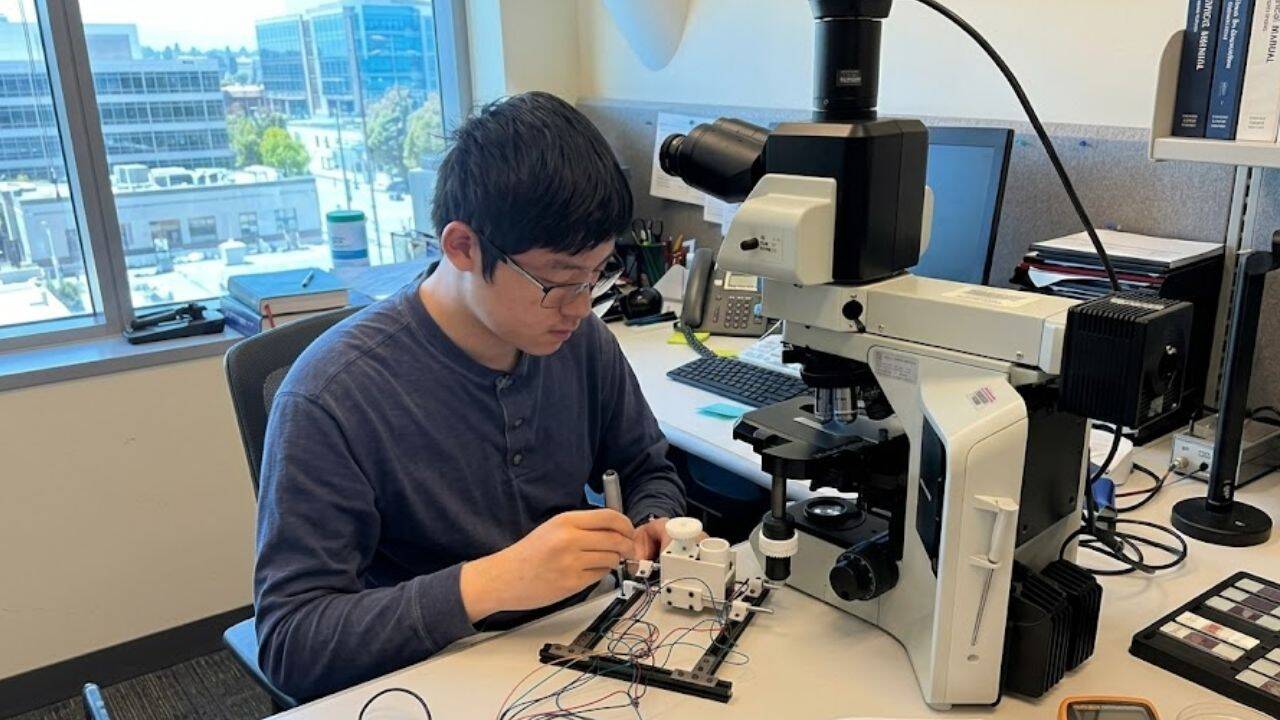
PC: Davidson Institute
‘ALLocate’ uses artificial intelligence to examine bone marrow samples
Leukaemia diagnosis often relies on expensive equipment and expert analysis, making timely detection challenging in settings with limited resources. Yan developed ‘ALLocate’ to address this gap through an affordable artificial intelligence-powered microscope plugin. The system identifies key regions and counts abnormal cells directly on standard glass slides, without requiring bulky or costly whole-slide scanners.It works with existing microscopes and has a setup cost of about $100. Tests using real patient samples showed that ‘ALLocate’ achieved expert-level accuracy in identifying leukaemia cells. By combining deep learning with affordable equipment, he aims to make early detection more accessible to clinics around the world, particularly those without access to specialist pathology services.
How a family experience inspired Yan to work on leukaemia diagnosis
Yan’s motivation for the project came from a personal experience. His great-aunt was diagnosed with acute myeloid leukaemia a few years ago, and he said the family found the diagnostic process frustrating because it involved complicated steps and took a long time before she received treatment. Acute leukaemia involves the uncontrolled growth of immature white blood cells, known as blasts, in the bone marrow.Delays in treatment can make the disease especially deadly because it disrupts the production of essential blood cells. This can lead to serious complications, including infections and bleeding. His great-aunt’s experience inspired him to develop a system that could support faster and more accessible screening, particularly in underserved settings.
‘ALLocate’ is designed for areas without pathologists
Yan began distributing ‘ALLocate’ to a few local hospitals during the summer, where he learned how limited access to pathology services can delay diagnosis. One doctor told him that a clinician from their hospital would visit the Congo every six months to collect patient slides and send them back to her for remote review. With no pathologist in the area, samples pile up, and patients often wait months.Yan said many had died or reached a stage where treatment was no longer possible by the time their results arrived, as acute leukaemia can progress quickly. ‘ALLocate’ is designed to support pre-screening and remote pathology review in such settings. It processes samples and sends the results, along with the original patient data, to a pathologist for evaluation, even when no specialist is available on site.