At a time when urban green spaces are increasingly important for biodiversity, 16-year-old Gunisha Kaur from Ludhiana, Punjab, is working to create gardens that serve two purposes: providing habitats for pollinators and making nature more accessible to children with diverse needs.Her initiative, Buzzing Blooms, has established more than 20 pollinator gardens and ecological restoration projects across Ludhiana, Meerut, Mumbai and partner communities. Over 24 months of monitoring, these gardens recorded a 155% increase in pollinator species richness, from 18 to 46 species, according to Action For Nature, which named Gunisha its third-place winner in the 2026 International Young Eco-Hero Awards.The project brings together biodiversity conservation, community participation and inclusive outdoor spaces, reflecting Gunisha’s belief that environmental restoration should also consider the people who use these spaces.
How Buzzing Blooms began
Growing up in Ludhiana, a heavily industrialised city, Gunisha noticed a decline in local pollinator populations over the years. Her experiences at home also shaped the way she thought about the relationship between people and nature.Observing her younger autistic brother helped her recognise how calming natural environments could be. It also drew her attention to the limited availability of safe, inclusive outdoor spaces for neurodivergent children.These observations led her to start Buzzing Blooms on March 5, 2023. The initiative aims to transform underused urban spaces into chemical-free habitats that support pollinators while making nature more welcoming to people with different sensory needs.Explaining the motivation behind her work, Gunisha told Action For Nature: “Rooted in my culture, which teaches respect for nature, I was inspired to create spaces that nurture both biodiversity and belonging.”The project’s approach reflects this combination of environmental conservation and inclusion. Rather than treating a garden only as a place for plants and insects, Gunisha has sought to make it a space where people with different needs can also feel comfortable.

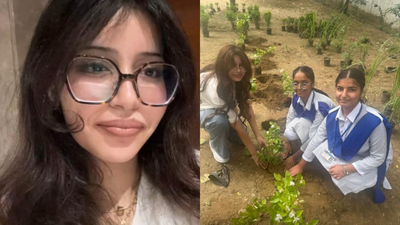
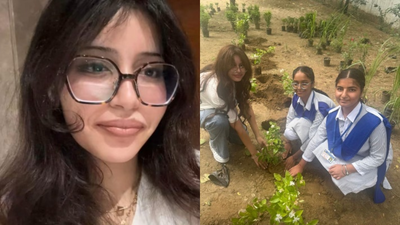
Through Buzzing Blooms, Gunisha Kaur has established more than 20 pollinator gardens and ecological restoration projects.
Gardens designed for pollinators and people
Buzzing Blooms uses native plants arranged in multiple layers, along with non-toxic, chemical-free cultivation methods. These gardens are intended to provide suitable habitats for pollinators while supporting biodiversity in urban settings.The layout also considers sensory accessibility. According to Action For Nature, the gardens feature structured pathways, non-thorny plants that are safe to touch, and designated areas for observing bees and butterflies.The idea is to allow children to experience the natural world in an environment designed to accommodate diverse sensory needs, rather than expecting every child to adapt to the same outdoor setting.The initiative’s ecological results have been measured over time. Action For Nature reports that pollinator species richness increased from 18 to 46 species over 24 months, a rise of 155%. Bee visitation also increased by nearly 200%.These figures offer a way to assess the project beyond the number of gardens created, linking its work to changes recorded in the local pollinator population.
Taking the initiative beyond gardens
The project has also focused on involving young people and local communities in environmental action. According to Action For Nature, Buzzing Blooms has engaged more than 4,000 students, including over 250 neurodivergent and vulnerable individuals. Its total reach exceeds 8,000 people through workshops, restoration drives, youth-led projects and inclusive learning programmes.Gunisha has also created the Buzzing Blooms Peer Advocacy Network, which has trained more than 500 youth ambassadors in environmental communication, public speaking and leadership. The network is intended to help young people participate in conservation and communicate its importance to others.Funding the initiative has involved finding ways to sustain the work. Action For Nature reports that Gunisha conducts art classes on weekends and puts the earnings, along with money from plant sales and scholarships, back into maintaining the gardens.Her work has also extended into technology. After observing that extreme summer heat could cause pollinators to temporarily leave an area, affecting fruit production, she developed AeroBloom, an AI-guided aerial artificial pollination drone system designed for compact urban spaces. The organisation says the system is intended to support agriculture during periods of climate stress, rather than replace natural pollinators.The innovation earned her a Bronze Medal at the Indian Science and Engineering Fair. Her research papers have also been presented at the Cambridge Centre for International Research Winter Symposium, according to Action For Nature.
‘Restoration alone is not enough’
Gunisha’s work has brought environmental research and community inclusion into the same conversation. Her research on the impact of pollinator gardens on neurodivergent and underprivileged children and social inclusion goals has been published in the International Journal of Humanities and Social Science, Volume 13, Issue 1 (2026), the organisation reports.For her, the purpose of restoring nature goes beyond increasing the number of plants or attracting more insects. The spaces must also be designed to help people participate in and benefit from the natural environment.Reflecting on what the initiative has taught her, Gunisha told Action For Nature: “Through this experience, the most important lesson I learned was that restoration alone is not enough, resilience must also be built into ecological solutions.”Her third-place finish in the 2026 International Young Eco-Hero Awards recognises this effort to combine biodiversity conservation with inclusive community action. Through Buzzing Blooms, the teenager from Ludhiana is building a model in which the success of a garden is measured not only by the species it supports, but also by the people it brings closer to nature.