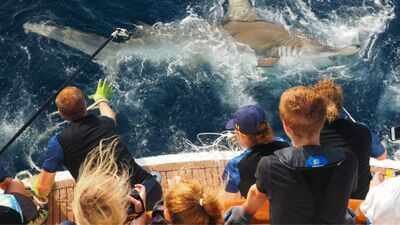
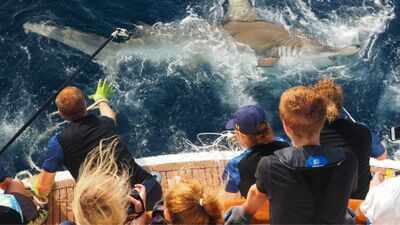
A family’s love of boating and the ocean eventually grew into a foundation that connects children with marine science. Angela Rosenberg remembers sitting at the helm of her family’s sailboat on the Chesapeake Bay, an experience that helped shape her future as a marine scientist. In 2016, she and her sister, Kari, established the ANGARI Foundation to bridge the gap between science, research, education, and the public.According to Florida International University (FIU News), the foundation later partnered with FIU to take local middle and high school students on weekend expeditions with marine scientists. Its 65-foot research vessel, R/V ANGARI, became a classroom at sea, where students could take part in activities such as shark tagging and plankton studies.
How did Rosenberg’s childhood love of the ocean lead to the ANGARI Foundation
Angela Rosenberg’s connection to the ocean began in childhood. Some of her earliest memories are of sitting at the helm of her family’s sailboat on the Chesapeake Bay. Those experiences brought her family closer and helped shape her interest in the water. As she grew older, that interest developed into a career in marine science.In 2016, Rosenberg and her sister, Kari, established the ANGARI Foundation to bridge the gap between science, research, education, and the public. They wanted to take marine science beyond the traditional classroom and create a space where people could learn through direct experience. The sisters began looking for a boat that could support research while giving scientists, teachers, students, and filmmakers a place to work and learn.
How did the 65-foot yacht become a classroom for marine science
The foundation found a 65-foot yacht named Cassandra Jade after months of searching. The vessel was maintained, but it needed changes before it could serve the foundation’s purpose. Renovations turned the living room into a laboratory and added indoor and outdoor workspaces.New technology and equipment were also installed. The yacht was then given a new name, ANGARI, combining the names Angela and Kari. Through a partnership with FIU, R/V ANGARI became a classroom where learning and field work could happen together.Local middle and high school students were set to join FIU marine scientists on weekend expeditions at sea. The planned activities included shark tagging and examining plankton under a microscope, giving students direct experience with marine research.
How did the partnership bring students closer to marine science
FIU and the ANGARI Foundation planned 12 trips during fall and spring semesters each year. The programme was designed to bring students aboard the vessel and let them work alongside marine scientists.FIU researchers led several expeditions, including trips involving Mike Heithaus. Students could see researchers at work and take part in activities such as shark tagging. The programme was also intended to help students understand what research involves and what a marine science career looks like.Their partnership would connect children with the ocean in a personal way. The foundation also saw the expeditions as a way to support research that researchers might not have been able to carry out on their own.
Rosenberg’s journey into marine science inspired the student programme
Rosenberg’s own path into marine science helped shape the student programme. At the time, she did not know that studying the ocean could become a career.She initially considered becoming a doctor, but her plans changed in college when she learned she could study marine biology. She went on to earn a bachelor’s degree in marine science and biology and a master’s in marine geology and geophysics.She later conducted research on deep-sea coral, marine fossils, and ocean acidification. Her own experiences made her hope that students joining the expeditions would become excited about science and see marine science as a possible career.