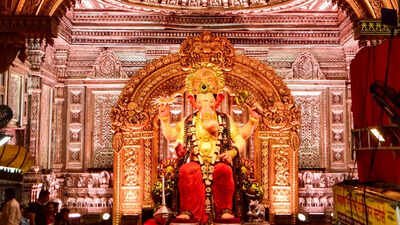
Mumbai’s most famous Ganpati did not begin with a grand pandal or celebrity crowds. Its story began with a market that had shut down, families worried about their livelihood and a promise made to Lord Ganesha. In 1934, that promise took the form of an idol. More than nine decades later, Lalbaugcha Raja remains one of Mumbai’s most powerful symbols of faith and community.
When a market disappeared, so did livelihoods
In 1932, a market near Peru Chawl in Lalbaug was shut down. The closure affected vendors, traders and fishermen, including members of the local Koli community who depended on the area for their livelihood.The community wanted a permanent marketplace. They prayed for a place where they could continue their trade. Their wish was eventually fulfilled when land was made available for a permanent market, which became the present Lalbaug Market.
A vow became Lalbaugcha Raja
The community’s gratitude became a religious promise, or navas. In September 1934, the traders and fishermen installed a public Ganesha idol dressed in the traditional attire of a fisherman.The Lalbaugcha Raja Sarvajanik Ganeshotsav Mandal was established in 1934. The idol soon became associated with the idea of a Navsacha Ganpati, or Ganesha believed to fulfil devotees’ wishes.That origin gives the festival a meaning that goes beyond spectacle. At its heart is a very ordinary human hope: finding work, stability and a place to belong.
The Kambli family gave the Raja his familiar face
The idol’s distinctive form has another remarkable story. The Kambli family has been making the Lalbaugcha Raja idol since 1935, when Madhusudan Donduji Kambli began the tradition. Three generations of the family have since carried the work forward.In 2011, Kambli Arts secured intellectual-property protection for the traditional design, after replicas of the famous idol became increasingly common.So the Raja seen today is not simply a yearly sculpture. It carries a recognisable artistic tradition that has been carefully passed down.
Why millions still stand in line
The scale of Lalbaugcha Raja today is almost difficult to imagine. The idol is widely reported to attract around 1.5 million devotees a day during the festival.There are separate arrangements for Mukh Darshan and Charan Sparsh or Navsachi darshan. Long queues, sometimes stretching for many hours, have become part of the Lalbaug experience.The Maharashtra Tourism Department describes Ganesh Chaturthi as a festival that brings together devotion, culture and community life. Lalbaugcha Raja is perhaps one of Mumbai’s clearest examples of that idea.
92 years completed, 93rd year begins
The mandal is celebrating its 93rd year in 2026, with the festival running from September 14 to September 25.There is, however, one detail often missed in retellings of the story. The annual celebration was not literally held without interruption. In 2020, the mandal cancelled its traditional festivities during the COVID-19 pandemic and instead focused on awareness activities.That interruption does not weaken the story. If anything, it makes the history more human. Lalbaugcha Raja began with people asking for a livelihood, survived generations of change and continues to bring strangers together every Ganesh Chaturthi.Disclaimer: Historical accounts of Lalbaugcha Raja contain traditional narratives alongside documented records. Details such as the navas and its wish-fulfilling reputation reflect community belief and should not be treated as independently verifiable supernatural claims.