A 17-year-old Canadian student has developed an AI-powered robot designed to tackle one of the most persistent forms of water pollution i.e plastic. The project, called ‘Ecoferroquatics,’ uses artificial intelligence, robotics and a magnetic liquid known as ‘ferrofluid’ to identify and remove plastic from water while trying to leave aquatic life undisturbed. Its creator, ‘Moroti Adegboyega’ of St. John’s, Newfoundland and Labrador(Canada), recently took the idea from a student project to the international stage, winning the ‘2026 Stockholm Junior Water Prize.’ What makes the robot unique is the way it approaches plastic itself. Instead of scooping everything in its path from water, the system is designed to identify its target and make plastic responsive to magnets. According to Water Canada and the Water Environment Association of Ontario(WEAO), the project reflects an effort to make water-cleanup technology more selective and environmentally conscious.
How a 17-year-old Canadian student is using magnetic liquid to remove marine plastic
At the centre of Ecoferroquatics is a simple idea of ‘making plastic easier to collect with magnets.’ According to WEAO, Adegboyega became interested in ferrofluid, a liquid containing tiny magnetic particles. He began exploring whether the material could be used to help remove plastic from water and eventually developed the idea into an autonomous cleanup system. The robot uses an onboard camera and artificial intelligence to detect plastic in the water and determine how it should respond. Once the system has identified its target, magnetic materials help capture and remove the plastic.The system can make plastic magnetic, allowing a magnet to pull it from the water. Water Canada reported that the project uses biodegradable ferrofluid to selectively remove plastic. During testing, the system was particularly effective at collecting very small, microplastic-scale particles that can slip through simpler screening methods. That matters because plastic pollution does not remain in one form. Larger pieces can break down into increasingly smaller fragments, which can be swallowed by wildlife and carry harmful chemicals through the food chain.
The AI robot was designed to avoid disturbing aquatic life
Collecting rubbish from water can create another problem if the cleanup method harms the animals living there. This was one of the issues Adegboyega considered while developing Ecoferroquatics. WEAO reported that the artificial intelligence was trained to identify plastic rather than aquatic organisms. The aim was to make the robot selective about what it collects instead of treating everything in the water as a target. Its physical design also reflects that concern. Rather than using conventional propellers, Adegboyega designed the robot around paddles. He also created his own ferrofluid mixture using vegetable oil as part of an effort to make the system more environmentally conscious.This approach sets Ecoferroquatics apart from a simple cleanup machine. Water Canada noted that some existing methods, including nets, trawlers and filters, can damage marine life or require substantial manual labour. Ecoferroquatics was developed as an alternative that could use automation to make plastic removal more targeted.
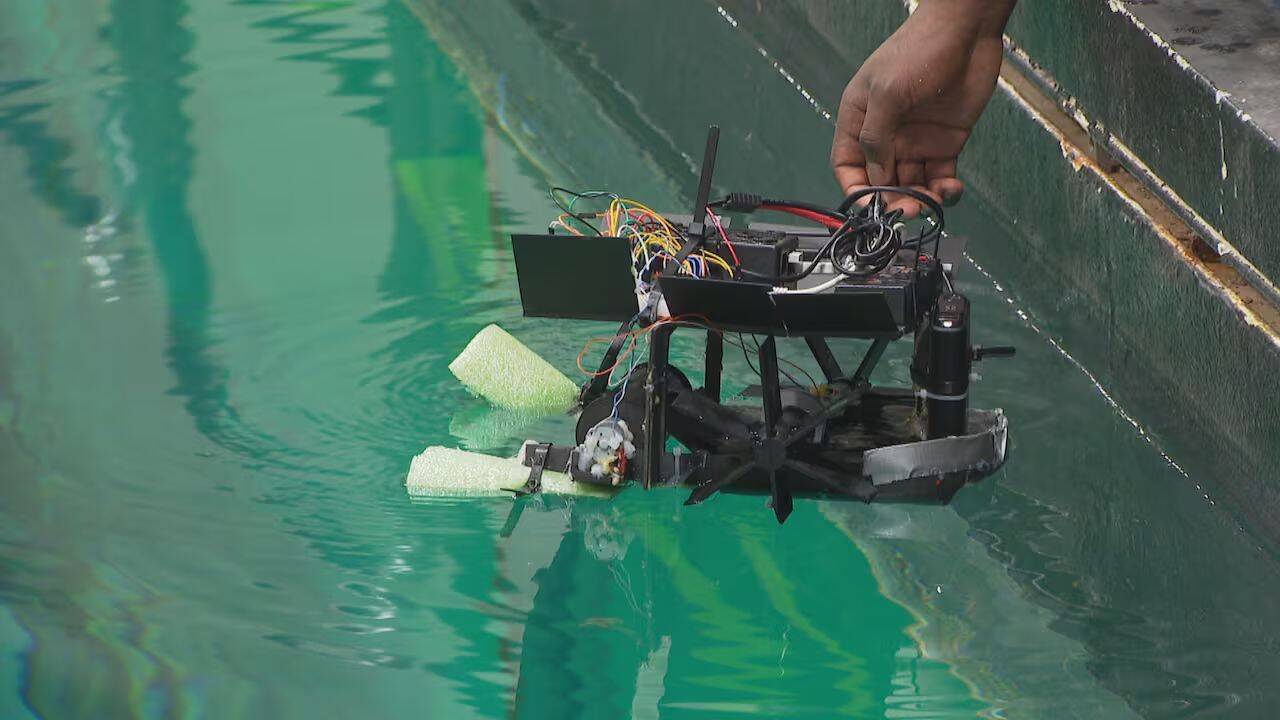
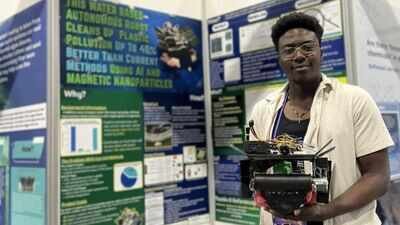
The autonomous robot that uses an AI model to detect plastics in the water. Image Credit: Danny Arsenault/CBC
How did a teenager with little robotics experience build such a device
Adegboyega did not begin the project as an expert in every field involved. According to WEAO, his strongest background was in software and coding, while he had far less experience in robotics, physics, water science and environmental engineering. The project therefore became a process of learning by doing. His early prototype did not even have a conventional hull, and WEAO reported that he carried out around six flotation trials before successfully getting the system to float. Each stage involved designing, testing, identifying problems and trying again. That process gradually pushed him into subjects he had not previously studied in depth. The experience also strengthened his interest in robotics and environmental engineering. Ecoferroquatics developed through repeated experiments and adjustments, with Adegboyega learning the skills along the way.
From a student project to an international recognition in Stockholm
Adegboyega’s work eventually took him to Stockholm, where he represented Canada at the 2026 Stockholm Junior Water Prize. WEAO reported that he was named the winner on August 25 and received the award from Crown Princess Victoria of Sweden during a ceremony at Stockholm City Hall as part of ‘World Water Week.’ The international recognition did not end the project. According to WEAO, Adegboyega is already considering building larger systems capable of collecting more plastic or creating smaller robotic units that could work together. For now, the achievement shows how an idea developed by a teenager with a background in coding grew into a working environmental technology. By combining AI, robotics and magnetic liquid, Adegboyega has created a different approach to plastic pollution, one that aims not only to remove waste from water, but also to be more careful about the life already living there.

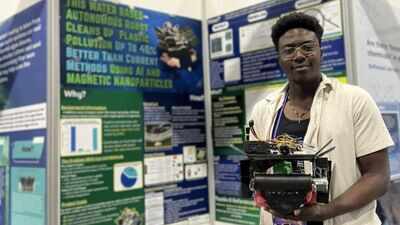
Moroti Adegboyega, winner of Stockholm Junior Water Prize, accepts his award from Crown Princess Victoria of Sweden. Image Credit: CBC Canada