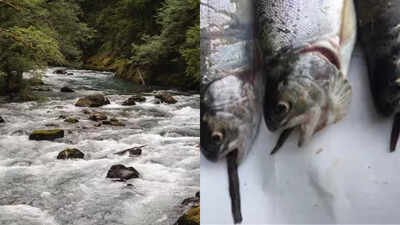
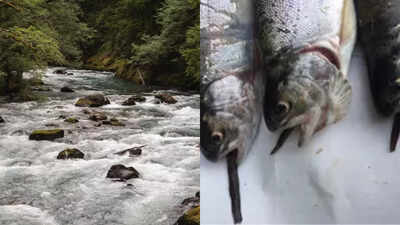
Mount Rainier’s glaciers and snowfields feed a magnificent system of icy streams and mountain lakes. On the surface, these waters look pristine, scattered pools in one of America’s most iconic landscapes. But beneath the surface, scientists are looking at a legacy that stretches back more than a century. According to a report published by USGS Publications, between 1915 and 1972, over nine million fish were stocked in lakes and streams throughout Mount Rainier National Park. The mission was simple to create fishing opportunities for recreation. But stocking these naturally fishless waters with fish did more than give anglers new opportunities. They altered aquatic ecosystems and placed new pressures on native species. Today the park has about 35 lakes and many streams still supporting breeding populations of non-native fish, adds the report. If we go by the report published by the National Park Service, before fish were introduced, all lakes in Mount Rainier were naturally fishless. The absence of fish provided amphibians with relatively secure breeding sites and habitat. The introduction of brook trout (Salvelinus fontinalis) and other non-native fishes tipped the balance. Fish can feed on amphibians and compete with native species, but can also alter food webs and other ecological relationships. This is especially important for conservationists because native amphibians are sensitive to environmental change. One of the greatest potential threats to amphibian species of concern in the park is the continued spread and persistence of introduced fish.
Bull trout face competition
Amphibians are beyond the effects of introduced fish. Mount Rainier also provides habitat for bull trout (Salvelinus confluentus), a char species listed as federally threatened. Bull trout need cold-water streams and lakes and historically have been found in several drainages within the park. But their nonnative cousin, the brook trout, can make their survival a challenge. Brook trout compete with bull trout for resources, prey on juvenile bull trout and hybridize with them. Thus, brook trout have been identified as a threat to bull trout persistence and recovery in Mount Rainier. Scientists also are seeking possible presence of Dolly Varden (Salvelinus malma) in the park. While the species is likely present, it has not yet been documented there.
Reading the water for clues
Mount Rainier poses mapping challenges for aquatic species. In remote areas many fish and amphibian populations occur at relatively low densities and conventional surveys are therefore time-consuming and expensive. One answer is environmental DNA, or eDNA. Every organism leaves a genetic trace. Fish and amphibians release DNA into the surrounding water in the form of feces, mucus, skin, scales and carcasses. Scientists can gather these traces by pumping water through a fine filter. The preserved filter is then tested in the lab to identify which species have left DNA behind in the sample. For park staff, the technique is an efficient way to survey vast areas. Instead of actually finding each animal, scientists can take samples of water to find out if certain kinds of animals live in a watershed. Then the results can point to areas that require further detailed investigation.
DNA tells a fish’s story
Today, the park is combining eDNA surveys with another powerful tool: direct genetic sampling of fish. Depending on the species and location, researchers catch fish with gillnets, hook and line or electro-fishing. A small part of the upper tail fin is cut out and preserved in ethanol for analysis. Genetic information, in contrast, can tell you things that are not visible to the naked eye. Researchers can determine whether fish originated from past stocking or native populations. They can also determine the degree of hybridization, discriminate closely related species and examine life-history characteristics. This information is especially valuable for char species, for which it may be difficult to ascertain origins and relationships solely based on physical characteristics.
Developing a picture of the park
The joint research program will map the distribution of fish and amphibians and will uncover the genetic architecture of fish populations. Park technicians have collected 28 eDNA samples, initially focusing on the White River, Puyallup, Mowich and Carbon River watersheds due to their potential overlap of char species. Genetic samples were also collected from several species that live in the park’s lakes and streams, including bull trout, brook trout, rainbow trout, cutthroat trout and coho salmon. The research has three main goals: To determine the distribution of aquatic species, to understand the genetic diversity and population structure of fish, and to determine if Dolly Varden is present.
Broadening the investigation
The 2022 field season plan included a major expansion of the eDNA program with 89 proposed sampling sites. New work in the Huckleberry Creek, Ohanapecosh and Nisqually drainages would focus more on detecting amphibian species. Researchers also planned to add to the genetic library of fish in the park, by collecting additional char samples from lakes and streams. One large effort includes nearly 700 char genetic samples collected across the Puyallup watershed by Mount Rainier National Park and regional partners including the Puyallup Tribe of Indians and the U.S. Fish and Wildlife Service. Analysis of these samples could indicate the distribution of the char population within and outside the park, and the degree of hybridization. Ohanapecosh drainage is a priority, too. Genetic testing of rainbow and cutthroat trout might indicate whether these fish are native or from stocked populations, information that could influence future fishing regulations and conservation efforts.
Science to repudiate a legacy
More than nine million fish were stocked in the waters of Mount Rainier for recreational purposes. Today scientists are using DNA, genetics and field surveys to understand the ecological consequences of that decision. The work could eventually allow park managers to identify native versus introduced populations, find vulnerable amphibian habitats and better protect threatened bull trout. The best hints about the future of Mount Rainier’s mountain waters may be lurking in something unseen: genetic fingerprints left behind in a single water sample.