Swamps and peatlands play an important role in the global carbon cycle and, consequently, in the global climate. Scientists wanted to know if there was a link between climate change and carbon loss in peatland ecosystems. Researchers at the Department of Energy’s Oak Ridge National Laboratory looked at the impact of warmer climates on peatlands, and what they found was striking. When the temperature rises, peatlands flip from storing carbon to releasing it. They noticed that the shift happens faster than expected, and the implications ripple across climate forecasting models worldwide. The findings are published in the journal AGU Advances. Their study provides a glimpse into the potential future of what could happen as the climate warms, and large amounts of carbon stored in peat bogs could be released into the atmosphere as greenhouse gases.
Peatland turns carbon sink to leak
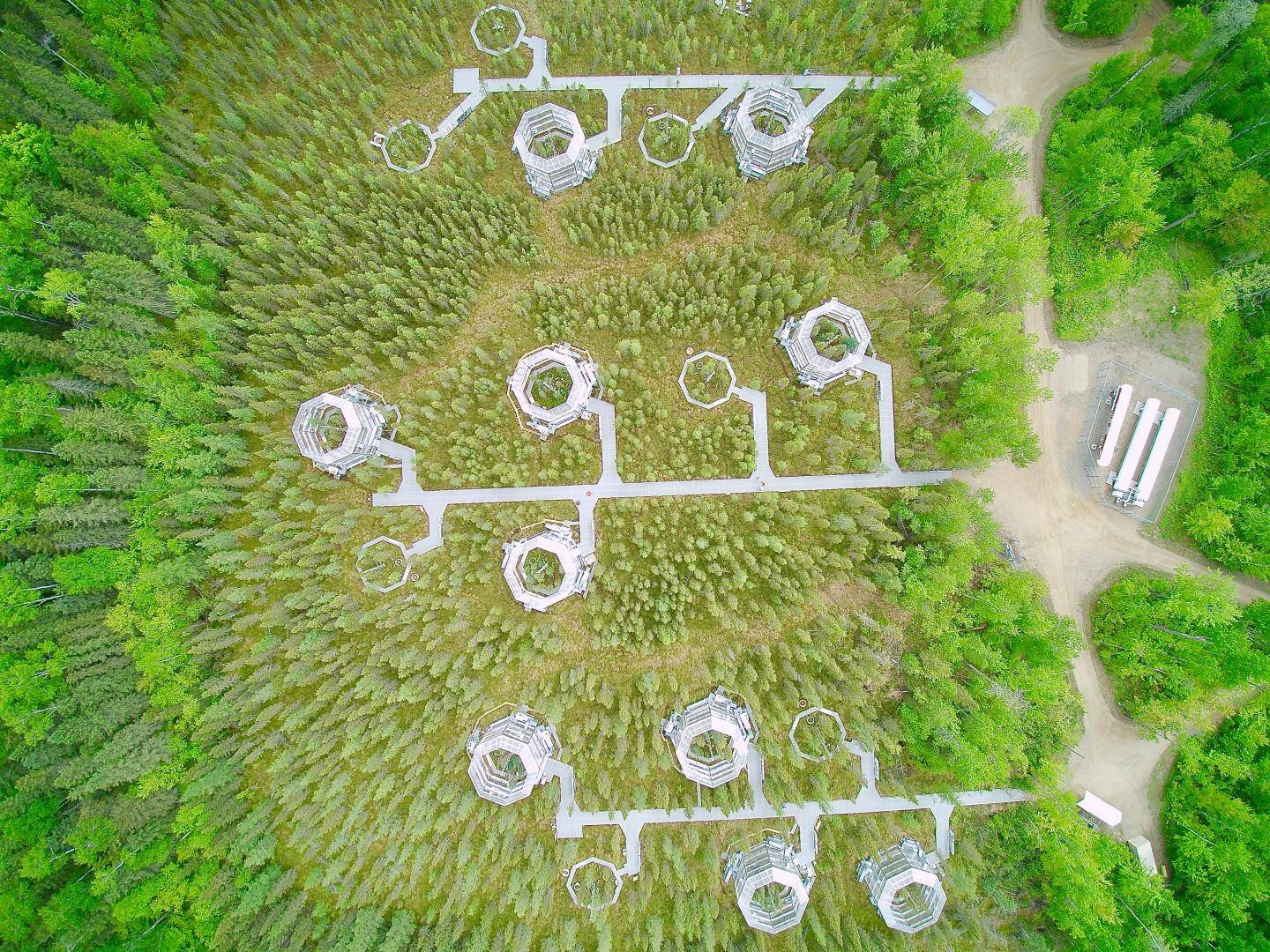
Pic credit: Misha Krassovski/ORNL, U.S. Dept. of Energy
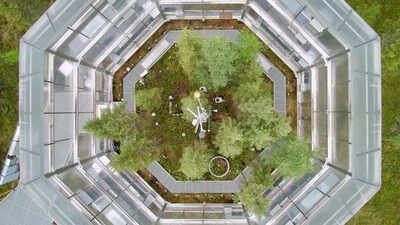
Peat soils cover about 3% of Earth’s land, and yet they store at least one-third of global soil carbon. That’s roughly twice as much as the world’s forests can store.Peat bogs are especially good at locking away carbon due to their cold, wet and acidic conditions, which slow decomposition, allowing layers of old plant material to build up and remain preserved deep underground. But warming temperatures are rewriting that equation.Researchers have paid special attention to these enormous carbon reserves and questioned how much and how quickly hotter, drier conditions in a peatland bog can trigger carbon release in the form of carbon dioxide and methane into the air.Researchers at Oak Ridge National Laboratory found that within just three years of experimental heating, peatland plots shifted from carbon accumulators to carbon emitters. They examined data from the SPRUCE project (Spruce and Peatland Responses Under Changing Environments), where scientists in Minnesota’s Marcell Experimental Forest have been exposing bog ecosystems to simulated future climate conditions since the early 2010s. SPRUCE used a series of enclosures to expose the peatlands to five different temperatures, with the hottest chamber seeing an increase of about 16°F above ambient temperature, above and below ground. Half of the enclosures also received elevated levels of carbon dioxide.“Because of DOE’s investment in a large-scale experiment, we’ve been able to study whole ecosystem warming across a range of temperatures that can’t be extrapolated from historical data. In doing so, we have evidence that carbon losses will be anticipated for rapidly changing peatland systems in the future,” Paul Hanson, ORNL ecosystem scientist and SPRUCE project coordinator, said in a statement.The researchers looked at three years of SPRUCE data and tracked changes in plant growth, water and peat levels, microbial activity, fine root growth and other factors that control the movement of carbon into and out of the ecosystem. By analysing these factors, they made something called a carbon budget.
What they found
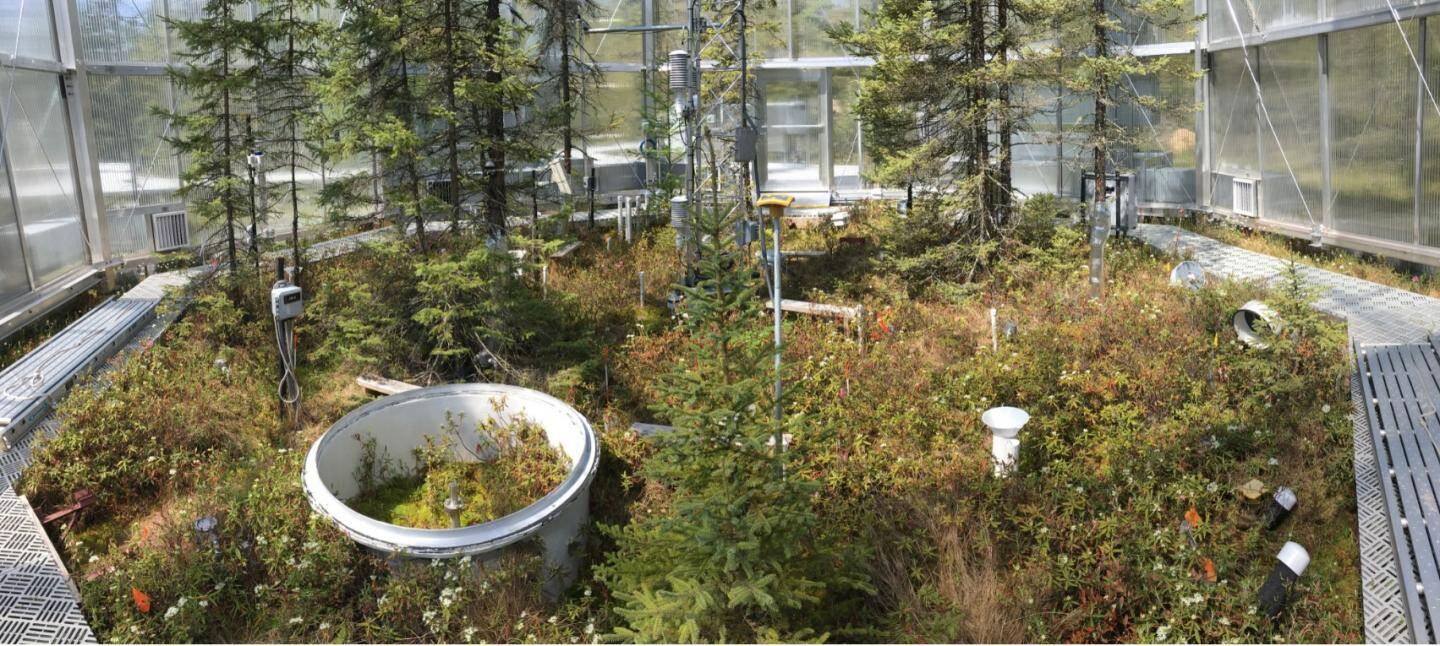
Pic credit: ORNL, U.S. Dept. of Energy
The researchers saw that in just three years, all the warmed peat bogs turned from carbon accumulators into carbon emitters. This is the first time they have documented such changes in a whole ecosystem plot. The researchers also found that this shift occurred even at the most modest level of warming (about 4°F above ambient temperature). They recorded carbon loss rates five to nearly 20 times faster than historical rates of accumulation.The warmer temperatures directly correlated with greater carbon emissions, with the warmest plots emitting the most carbon dioxide and methane. They were surprised to find such a linear relationship between heat and carbon loss.“This is a very tight relationship for biological data. These results were within the range of hypotheses that we allowed ourselves to think about, but the sensitivity of carbon loss to temperature was a bit of a surprise,” Hanson said.The researchers noticed that the decline of a key species, sphagnum moss, contributed notably to the net carbon loss. A previous study by ORNL colleague Richard Norby also suggested that sphagnum helps store carbon in peat, but warming and drying can cause the moss to die and carbon storage to decline.