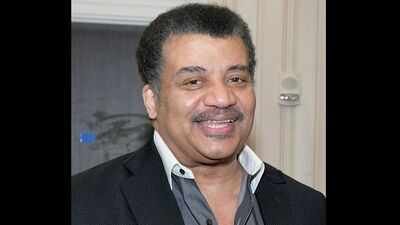
Neil deGrasse Tyson‘s words present education as something considerably bigger than simply memorising facts. “As an educator, it’s my duty to empower you to think,” he said. “So that you can go forth and think accurate thoughts about how the world is put together.” He said this in 2010, while directly debunking the widely circulated “2012 Armageddon” conspiracy theory, a genuinely popular claim at the time that the Mayan calendar predicted the world would end on 21 December 2012. For Tyson, the role of an educator was never simply to hand someone the correct answer. It was to give people the genuine ability to question information, examine real evidence, and actually reach their own informed conclusions, a distinction that becomes considerably clearer once you know exactly what he was actually responding to when he said it.
Quote of the day by Neil deGrasse Tyson
“As an educator, it’s my duty to empower you to think. So that you can go forth and think accurate thoughts about how the world is put together”
The fuller quote, and why it genuinely matters
Tyson’s original comments continue considerably further than the single sentence usually shared alone. “I could just tell you it’s all bunk,” he said, “but then you wouldn’t be empowered to understand why, other than to quote, ‘Oh, Doctor Tyson said…’ And I never want you to quote me citing my authority as a scientist for your knowing something. If that’s what you have to resort to, I have failed as an educator.” That fuller passage genuinely changes how the quote should actually be read. Tyson was not simply trying to correct one specific false claim about the world ending. He was making a much broader point about what real education is actually supposed to achieve, protecting people from being fooled by the next false claim too, rather than just this particular one.
The powerful message behind Neil deGrasse Tyson’s quote
Tyson is suggesting that genuinely good education should teach people how to actually think, rather than simply telling them what to think in the moment. Facts are genuinely important, but knowing a large collection of facts does not necessarily mean someone actually understands how to properly evaluate new information as it arrives. A person also needs to know how to ask a genuinely good question, recognise an unreliable claim, and honestly distinguish real evidence from simple assumption. That ability becomes considerably more important as people encounter genuinely enormous amounts of information every single day.
Why education is considerably more than memorising facts
Memorisation can certainly help people learn genuinely essential information, but education becomes far more powerful once that knowledge can actually be applied elsewhere. Knowing a scientific fact is genuinely useful on its own. Understanding exactly how scientists actually reached that particular conclusion is even more useful, because it lets a person evaluate an entirely new claim using genuinely similar reasoning later on. Real education, in that sense, should build both actual knowledge and the intellectual tools needed to properly use it.
What Tyson genuinely means by “empower you to think”
The word “empower” is doing real work here. Tyson’s message suggests that students should eventually become genuinely capable of thinking independently, rather than depending permanently on a teacher for every future answer. A good educator can certainly provide real knowledge, while also genuinely encouraging students to ask how we actually know something, what real evidence supports it, whether another explanation could genuinely exist, and what assumptions are quietly being made underneath the whole claim. Questions like these genuinely turn learning into an active process, rather than something that simply happens to a person passively.
Why genuinely accurate thinking actually matters
People make real decisions based on their own understanding of how the world actually works. If that understanding rests on inaccurate information or a misleading claim, those decisions can genuinely be affected as a result. Accurate thinking has never actually meant believing you can never be wrong about anything. It means being genuinely willing to change your own understanding once better evidence actually becomes available, which is really the core of proper scientific thinking itself.
Why genuine curiosity is such an important part of real learning
Tyson’s approach also connects education directly with genuine curiosity. A genuinely curious person never really stops at simply “what.” They actually want to know why and how too. That curiosity can lead to considerably deeper understanding over time, and it can also encourage people to explore subjects well outside their immediate interest, discovering real connections between areas of knowledge that initially looked completely unrelated.
Why critical thinking genuinely matters in everyday life
Critical thinking is never really limited to a classroom or a laboratory setting. People actually use it when deciding whether a news story genuinely seems credible, when evaluating an advertisement, or when deciding whether a claim shared online is actually trustworthy. The genuine ability to examine real evidence and question an assumption can help people make considerably better decisions even in fairly ordinary, everyday situations.
Other memorable quotes by Neil deGrasse Tyson
“Knowing how to think empowers you far beyond those who know only what to think.”“There is no shame in not knowing. The problem arises when irrational thought and attendant behavior fill the vacuum left by ignorance.”“Science literacy is the artery through which the solutions of tomorrow’s problems flow.”“Any time we are answer-driven rather than idea driven, we have lost the true meaning of education.”
How to develop genuinely better thinking skills
- Ask real questions, and never be afraid to actually ask how a claim was originally established.
- Look honestly for evidence, separating genuine opinion from information actually supported by reliable evidence.
- Consider a real alternative explanation, since one interpretation is rarely actually the only possibility available.
- Check your own assumptions honestly, genuinely asking yourself why you actually believe something in the first place.
- Learn from genuinely reliable sources, looking well beyond headlines and social media posts alone.
- Stay willing to actually change your mind, since new evidence can genuinely improve your own understanding.
- Distinguish real confidence from genuine certainty, since being confident never actually means being incapable of error.
- Understand cause and effect properly, remembering that correlation never automatically proves genuine causation.
- Stay genuinely curious, treating an unfamiliar subject as a real opportunity to learn something new.
- Think independently, using other people’s knowledge as a genuine starting point rather than the actual final answer.
Why Neil deGrasse Tyson’s quote remains relevant
In a world genuinely filled with information, education is no longer simply about knowing where to actually find a fact. It is also about knowing which information genuinely deserves to be trusted, and how to actually make sense of it properly. Tyson’s quote captures that idea clearly, especially once you know it was said while directly confronting a genuinely popular piece of misinformation rather than simply offered as an abstract statement about teaching. A genuinely strong education should leave people with considerably more than a simple collection of answers. It should give them the real confidence and actual ability to investigate a question for themselves, long after the original teacher or claim has already moved on. The real power of education was never simply knowing more facts. It is genuinely learning how to think carefully enough to understand the world considerably more accurately, on your own, the next time a false claim comes along.