A former dumping ground for dredged material from the Manchester Ship Canal has been transformed into a wetland. The wetlland has now become the most important breeding site in the UK for the rare black-necked grebe.According to the Royal Society for the Protection of Birds (RSPB),Woolston Eyes in Cheshire recorded 35 breeding pairs of black-necked grebes in 2025, a sharp rise from just four pairs in 2023. Of these, 29 pairs nested in the newly restored part of the wetland.The site now supports 64% of the UK’s black-necked grebe breeding population. An average of only 54 breeding pairs are recorded across the UK each year, making Woolston Eyes an important site for the species.The change followed wetland restoration work led by RSPB, along with the Woolston Eyes Conservation Group. The work began in 2021 and focused on restoring a dried-out and overgrown part of the site.
Restoring the wetland
Woolston Eyes was once a neglected wasteland used for dumping dredgings from the Manchester Ship Canal. It has since been transformed into a mix of freshwater pools, reedbeds, willow scrub and rough grassland.These different habitats now support several species, including willow tits, pochards and grasshopper warblers. The site is also a Site of Special Scientific Interest (SSSI).The restoration focused on one settlement lagoon that had dried out. Willow scrub and invasive non-native plants had taken over the area, reducing the wetland habitat available for wildlife.During the restoration, vegetation was cleared and the nutrient-rich topsoil was removed. The soil was then used to build embankments around two shallow wetland areas. Nesting islands were also created as part of the work.The restoration was specifically designed to attract black-headed gulls and create shallow freshwater habitat rich in invertebrates. Black-necked grebes nest beside black-headed gulls because the gulls can help protect them from predators.The newly created habitat quickly began to attract black-necked grebes. In 2023, four pairs bred on the restored area and successfully raised 15 young.
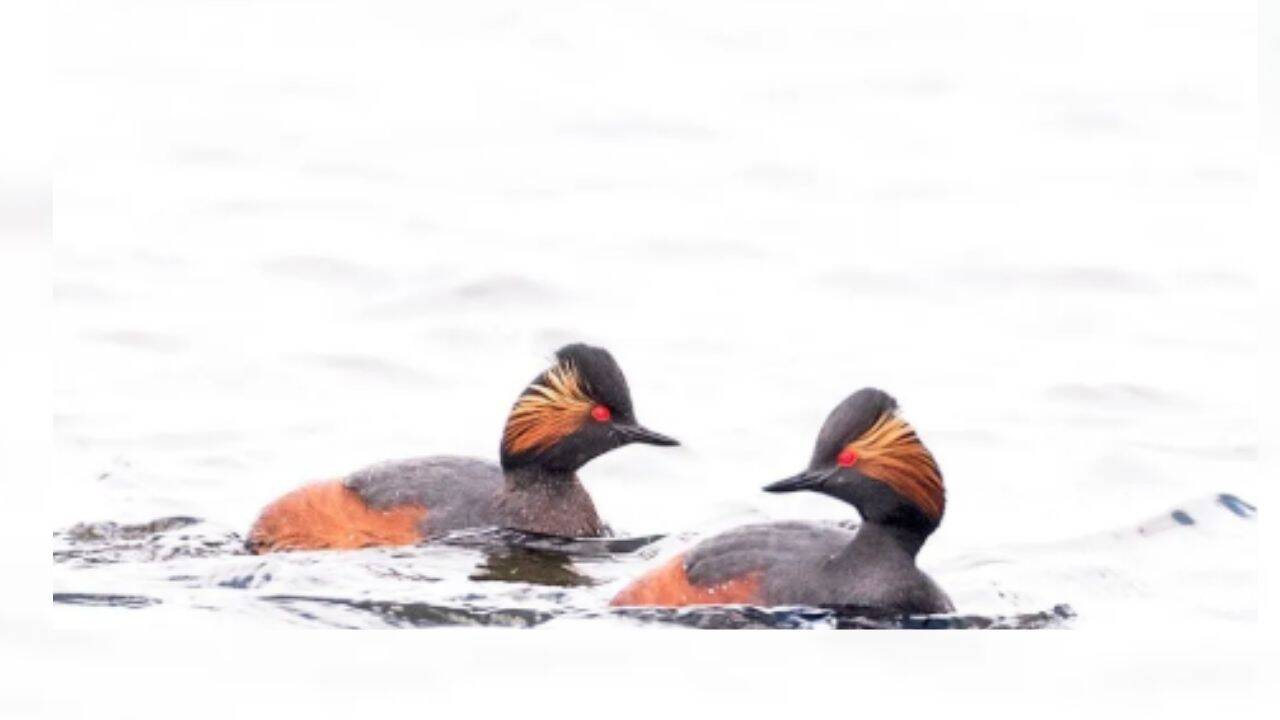
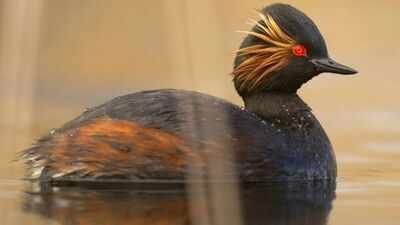
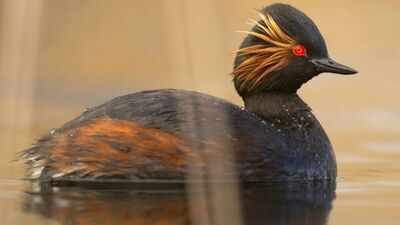
A pair of black-necked grebes
Grebe numbers climb rapidly
The number of breeding pairs has continued to increase as the restored wetland is being managed. By 2025, 35 breeding pairs were recorded at Woolston Eyes.The rise from four pairs in 2023 to 35 pairs in 2025 means the number of breeding pairs increased more than eightfold in two years. Twenty-nine of the 35 pairs nested on the newly restored wetland area.The black-necked grebe is an uncommon breeding bird in the UK and is found at only a handful of sites in central and eastern England. It is Amber listed under the UK Birds of Conservation Concern.The birds are small and have glossy black and chestnut-coloured plumage. They also have distinctive golden feathers behind their bright red eyes.Black-necked grebes can be seen throughout the year, but they are secretive while nesting. During courtship, a male and female swim together and mirror each other’s movements. They wag their heads before rising out of the water breast to breast. They then build floating nests among the reeds.Gavin Thomas, an RSPB ecologist, says, “It is fantastic to see Black-necked Grebe numbers increasing at Woolston Eyes thanks to the hard work of staff, volunteers and partners to create prime habitat for this rare and attractive species,” he said as quoted by The Guardian.“The rapid growth in numbers shows how effective targeted conservation action can be and is a great example of nature thriving when it is given a chance,” he adds.
Keeping habitat suitable
Woolston Eyes depends entirely on rainfall to remain wet. However, its water levels can be managed so that different parts of the wetland are treated at different times.One area can be dried out, refreshed and then reflooded to restore the conditions needed by black-necked grebes. Other areas can continue providing habitat while this work takes place.This rotational management is important because black-necked grebes can abandon sites quickly when the habitat deteriorates as it matures.The approach has become particularly important as wetlands face pressure from changing weather conditions. The RSPB said recent hot weather and prolonged heatwaves in the UK are a concern for wetland habitats. About 90% of UK wetlands have already been lost over the past 100 years, according to the RSPB.